We believe that all cultural, historical and natural heritage, wherever they are should be preserved. LEARN MORE
News

Default Category

Ancient Roman neighborhood unearthed in France

According to CNN, a team of archaeologists have unearthed a well-preserved ancient Roman neighborhood complete with mosaics and furniture on the outskirts of a city in southeastern France.  The discovery and the site of excavation is on the banks of the Rhone River in Vienne, where three new buildings have been planned to be built.

The team have expressed their surprise that the site is in such great condition as they believe that two separate fires almost destroyed the town in the second and third centuries AD.

Preventive excavations began in April, as the team worked to prepare the site for the new buildings.

It is now reported that France has classed the site as an “exceptional discovery,” allowing the archaeologists, who were due to finish the excavation in September, to continue until December. The public will have a chance to view the archaeologists’ findings, with exhibitions planned for 2019 and 2020 at the museum of Saint-Romain-en-Gal according to CNN.

UNESCO Assessing damage from hurricane Irma to heritage sites

The UNESCO Heritage division extended its condolences to the residents of the Caribbean islands struck by hurricane Irma between 5 and 11 September 2017, for the loss of human lives and the hardship resulting from the devastation.  UNESCO also acknowledges that the first priority after such a disaster is always rescuing people and providing humanitarian aid. Following that, UNESCO has been in close contact with local authorities, assisting with efforts to assess damage to cultural heritage in the region and supporting initial recovery efforts.

The areas affected by Irma include Cape Verde, Antigua and Barbuda, Saint Barthelemy, Saint Martin and the Virgin Islands, the countries of the Greater Antilles, the Bahamas, and Florida (USA).

Some of the heritage sites affected by the Hurricanes (including Irma) so far in this year’s hurricane season include:  Brimstone Hill Fortress National Park (Saint Kitts and Nevis), Old San Juan (La Fortaleza and San Juan National Historic Site in Puerto Rico), Old Havana and its Fortifications (Cuba) to just name a few.  These islands’ environment and landscape have been greatly impacted by the hurricanes as reported by the news outlets and it will take many years for the infrastructure and tourism industries to be built again.

UNESCO calls for protection of the World Heritage Site of Sabratha in Libya

According to the UNESCO and other news outlets, on 21 September, UNESCO was informed by several sources that military action is intensifying within and around the Archaeological Site of Sabratha in Libya, inscribed on the World Heritage List since 1982. According to these reports, military action has been growing within and around the site and therefore, UNESCO is expressing concerns on the matter.  UNESCO has now called on all parties to cease violence and ensure the protection of Sabratha’s invaluable cultural heritage, including its archaeological museum. The UNESCO’s Director-General underscored the need to protect cultural heritage in times of conflict, as recently urged by the UN Security Council in its Resolution 2347.

The World Heritage Archaeological Site of Sabratha, once a Phoenician trading-post that served as an outlet for the products of the African hinterland, was part of the short-lived Numidian Kingdom of Massinissa before being Romanized and rebuilt in the 2nd and 3rd centuries A.D.

UNESCO has also reiterated its commitment to work with all Libyan cultural professionals to reinforce emergency measures for cultural heritage protection, and enable the rapid assessment, documentation and monitoring of heritage.

English Heritage Site Lake District gets special recognition

Earlier this year, in July 2017 when UNESCO met to discuss the World Heritage designation, the Britain’s Lake District was one of the 33 sites discussed. The great beautiful destination that attracts millions of visitors every year – long before it was awarded the Heritage Site in July, has now been put on an international level according to many in UK.

In order to celebrate and mark the year for the Lake District and millions of fans, the Royal mail is now allowing a special postmark in celebration of the new World Heritage Site status.

It has been reported that millions of items of stamped mail sent Second Class and First Class in late September will have the greeting: ‘Celebrating the Lake District World Heritage Site #WeAreTheLakes’.

According to the news, the Lake District National Park, said that this postmark will spread the word even further about the Lake District’s special badge of international recognition.

LAKE District fans across the UK are being urged to head to the post-box to secure a special postmark in celebration of the new World Heritage Site status.
The Lake District National Park became the UK’s 31st UNESCO World Heritage Site in July, 2017, and a marketing campaign, “We Are The Lakes”, was launched to capitalize on the new status.

Searching for traces of the ancient Temple of Athena

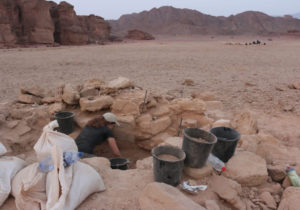
Archeologists have rolled up their sleeves to find the Temple of Athena, in the 2,800-year-old ancient city of Aigai, which appeared in 19th-century excavation research by German archeologists.

The excavation works are being conducted under the supervision of Yusuf Sezgin, assistant professor of archeology at

Manisa Celal Bayar University (Turkey) . The Temple of Athena is expected to be erected in at least two months after the definite localization of the temple.

In an interview with Anadolu Agency, Yusuf Sezgin indicated this was the first time since 2004 that there was excavation work for the discovery of the temple and they are trying to understand whether the temple was dedicated to Athena, the ancient Greek goddess of wisdom. Sezgin remarked that the region on which they were continuing the excavations signaled a carefully selected location for a temple.

“It is not known whether there are Temples of Athena in all of the 12 cities built by the people of Aiol south of İzmir during ancient times. On the other hand, Goddess Athena’s head was depicted on the coins from the Hellenistic-period in Aigai. In this respect, it can be deduced that she was one of the most important and protective goddesses of the city,” he said.

Emphasizing “pagan” beliefs in ancient times, Sezgin stated the discovery of the temple was key in understanding their beliefs. “That is the reason why we seek to understand what kind of a temple and belief Athena had. We think we will gain important information about the beliefs held in the region.

International Day for the Total Elimination of Nuclear Weapons

On September 26, the United Nations (UN) promotes a special day that calls for all countries to get rid of nuclear weapons.

17,000 Nuclear Weapons Worldwide

Nuclear weapons are explosive devices with a destructive power that comes from nuclear energy being released. More than half the world’s population live in countries that have nuclear weapons or are members of nuclear alliances. There are at least 17,000 nuclear weapons in the world today.

One single nuclear device can destroy a whole city and eliminate the natural environment and lives of future generations. They have already destroyed entire cities, like Hiroshima in Japan, where at least 150,000 people were killed or wounded after the city was bombed during World War II.

A World Without Nuclear Weapons

One of the UN’s oldest goals is to achieve worldwide nuclear disarmament – in other words, to see the world free of nuclear weapons. In December 2013, the UN decided to create a day to inform people and push governments to see the social and economic benefits of not having nuclear weapons. The Day for the Total Elimination of Nuclear Weapons is one of the UN’s efforts to seek more action on nuclear disarmament.

Kuwaiti Archaeologists Discover Rare Arabic Manuscripts

Kuwait University archaeological team has discovered rare manuscripts written in Arabic at Mount Athos in Greece.

They were able to unearth these documents at the historic mountain, which represents around 1,800 years of Christian history.

Mount Athos, is an ancient sacred place chosen as one of UNESCO’s World Heritage sites in 1988.

The archaeological mission, Professors Dr Abdulhadi Al Ajmi who visited monasteries and libraries in northern Greece pointed out that the manuscripts, which date back to the golden Islamic age, cover various subjects pertaining to daily events, scientific observations, religious affairs and more

International Day for the Preservation of the Ozone Layer

The United Nations’ (UN) International Day for the Preservation of the Ozone Layer is celebrated on September 16 every year. This event commemorates the date of the signing of the Montreal Protocol on Substances that Deplete the Ozone Layer in 1987.

What Do People Do?

On this day primary and secondary school educators throughout the world organize classroom activities that focus on topics related to the ozone layer, climate change and ozone depletion. Some teachers use educational packages from the UN Environment Programme (UNEP) that have been specifically tailored to address topics about the Earth’s ozone layer.

Other activities that are organized by different community groups, individuals, schools and local organizations across the world include: the promotion of ozone-friendly products; special programs and events on saving the ozone layer; the distribution of the UNEP’s public awareness posters to be used for events centered on the International Day for the Preservation of the Ozone Layer; and the distribution of awards to those who worked hard to protect the Earth’s ozone layer.

Background

In 1987 representatives from 24 countries met in Montreal and announced to the world that it was time to stop destroying the ozone layer. In so doing, these countries committed themselves, via the Montreal Protocol on Substances that Deplete the Ozone Layer, to rid the world of substances that threaten the ozone layer.

On December 19, 1994, the UN General Assembly proclaimed September 16 to be the International Day for the Preservation of the Ozone Layer, commemorating the date when the Montreal Protocol on Substances that Deplete the Ozone Layer was signed in 1987. The day was first celebrated on September 16, 1995.

Nancy Dupree dies in Afghanistan

Nancy Hatch Dupree an American historian who spent decades in Afghanistan working to preserve the heritage of the war-torn country has died following a long illness. 

An Afghan government statement said on Sunday that Nancy Hatch Dupree, who first came to Afghanistan in 1962 and spent much of her life collecting and documenting historical artifacts, died in Kabul overnight at the age of 90.

She amassed a vast collection of books, maps, photographs and even rare recordings of folk music, all now housed at Kabul University, and wrote five guidebooks.

Many Afghans viewed Dupree as one of their own, and hundreds of people posted condolences on social media.

“The Earthworks” were once important ritual communication spaces.

The geometric earthworks of southwestern Amazonia have raised the interest within the scientific community as well as the media and the general public, and they have been explored recently by several international research teams.

These unique archaeological sites have been labeled the Geoglyphs of Acre, as most of them are located in the Brazilian State of Acre. Nearly 500 sites have already been registered and have been included on the Brazilian State Party’s Tentative List for inscription on the UNESCO World Heritage List.

The construction period and use, span the time period of approximately 3000-1000 BP. The earthwork ditches form geometric patterns, such as squares, circles, U-forms, ellipses and octagons. They can be several meters deep and enclose areas of hundreds of square meters.

Members of the community interacted with the environment

Pirjo Kristiina Virtanen, Assistant Professor of Indigenous Studies at the University of Helsinki, Finland, has conducted research with indigenous peoples in the study area for a long time. Sanna Saunaluoma, Post Doctoral researcher at the São Paulo University, Brazil, is specialized in Amazonian archeology and made her doctoral dissertation on Acre’s earthwork sites. Their article published in the American Anthropologist (119[4], 2017), already in early view, examines pre-colonial geometric earthworks from the point of view of indigenous peoples and archaeology.

The study shows that the sites were once important ritual spaces where, through the geometric designs, certain members of the community communicated with various beings of the environment, such as ancestor spirits, animals, and celestial bodies. Thus people were constantly reminded that human life was intertwined with the environment and previous generations. People did not distinguish themselves from nature, but nonhumans enabled and produced life.

The geometric earthwork sites were especially used by the experts of that era, who specialized in the interaction with the nonhuman beings. The sites were important for members of the community at certain stages of life, and the various geometric patterns acted as “doors” and “paths” to gain the knowledge and strength of the different beings of the environment. Visualization and active interactions with nonhuman beings were constructive for these communities.

Contemporary indigenous peoples of Acre still regard earthwork sites as sacred places

The geometric patterns inspired by characteristics and skin patterns of animals still materialize the thinking of indigenous people of Amazonia and are also present in their modern pottery, fabrics, jewelry, and arts. As the theories of Amerindian visual art also show, geometric patterns can provide people with desired qualities and abilities, such as fertility, resistance, knowledge, and power.

Contemporary indigenous peoples of Acre still protect earthwork sites as sacred places and, unlike other Brazilian residents in the area, avoid using the sites for mundane activities, such as housing or agriculture, and therefore protect these peculiar ancient remains in their own way.

UNIVERSITY OF HELSINKI