
We believe that all cultural, historical and natural heritage, wherever they are should be preserved. LEARN MORE
News

Default Category

Sasanian loom discovered in Northern Iraq

A team of Frankfurt-based archaeologists has returned from the Iraqi-Kurdish province of Sulaymaniyah with new findings. The discovery of a loom from the 5th to 6th century AD in particular caused a stir.

The group of Near Eastern archaeology undergraduates and doctoral students headed by Prof. Dirk Wicke of the Institute of Archaeology at Goethe University were in Northern Iraq for a total of six weeks. It was the second excavation campaign undertaken by the Frankfurt archaeologist to the approximately three-hectare site of Gird-î Qalrakh on the Shahrizor plain, where ruins from the Sasanian and Neo-Assyrian period had previously been uncovered. The region is still largely unexplored and has only gradually opened up for archaeological research since the fall of Saddam Hussein.

The objective of the excavations on the top and slope sections of the settlement hill, some 26 meters high, was to provide as complete a sequence as possible for the region’s ceramic history. Understanding the progression in ceramics has long been a goal of research undertaken on the Shahrizor plain, a border plain of Mesopotamia with links to the ancient cultural regions of both Southern Iraq and Western Iran. These new insights will make it easier to categorise other archaeological finds chronologically. The excavation site is ideal for establishing the progression of ceramics, according to archaeology professor Dirk Wicke: “It is a small site but it features a relatively tall hill in which we have found a complete sequence of ceramic shards. It seems likely that the hill was continuously inhabited from the early 3rd millennium BC through to the Islamic period.”

However, the archaeologists had not expected to find a Sasanian loom (ca. 4th-6th century AD), whose burnt remnants, and clay loom weights in particular, were found and documented in-situ. In addition to the charred remains, there were numerous seals, probably from rolls of fabric, which indicate that large-scale textile production took place at the site. From the neo-Assyrian period (ca. 9th-7th century BC), by contrast, a solid, stone-built, terraced wall was discovered, which points to major construction work having taken place at the site. It is possible that the ancient settlement was refortified and continued to be used in the early 1st millennium BC.

World Science Day for Peace and Development

Celebrated every 10 November, World Science Day for Peace and Development highlights the important role of science in society and the need to engage the wider public in debates on emerging scientific issues. It also underlines the importance and relevance of science in our daily lives.

By linking science more closely with society, World Science Day for Peace and Development aims to ensure that citizens are kept informed of developments in science. It also underscores the role scientists play in broadening our understanding of the remarkable, fragile planet we call home and in making our societies more sustainable.

The Day offers the opportunity to mobilize all actors around the topic of science for peace and development – from government officials to the media to school pupils. UNESCO strongly encourages all to join us in celebrating World Science Day for Peace and Development

What can you do?

The success of the World Science Day for Peace and Development will depend on the active involvement of many partners such as intergovernmental and non-governmental organizations, scientific and research institutions, professional associations, the media, science teachers and schools.

Different activities will be undertaken to mobilize support for the objectives of the World Science Day for Peace and Development.

We invite you and your organization to celebrate this Day with some special events or action. Next, you can find a list of potential actions that can be undertaken by you and your organization:

  • DIFFUSE World Science Day for Peace and Development in your institution or in your town, city or local community, through municipal and state government channels.
  • ORGANISE an ‘Open Day’ in your institution to highlight the importance of science for peace and development.
  • INCORPORATE the messages of World Science Day for Peace and Development into official speeches, publications and other activities taking place on 10 November.
  • ORGANIZE classroom discussions to emphasize the many different ways science and technology touch our daily lives.
  • CONTACT national and local media (TV, radio, print, electronic) to highlight the importance of celebrating WSDPD at national and local level.
  • WRITE articles and letters about the importance of science for sustainable societies to the media, including industry trade journals, organization newsletters, and school newspapers.
  • VISIT local schools to speak about careers in science, deliver scientific presentations or demonstrations to young students.
  • BUILD classroom-to-classroom connections between schools via the Internet to talk about science projects that will interest young people.
  • ORGANIZE conferences and forums.
  • FIND a sister institution and carry out a joint activity highlighting the importance of science.
  • INVITE university faculty to join with community organizations and schools to celebrate the Day.
  • ARRANGE a science museum visit


Pregnant Egyptian Woman’s Remains Discovered in King Solomon’s Mines

A consortium of archeologists and researchers from Tel Aviv University have discovered the 3,200-year-old remains of a pregnant Egyptian woman in Southern Israel’s Timna Valley, adjacent to an ancient Egyptian temple in an area once known as “King Solomon’s Mines”, according to a report in Haaretz.

Situated in an arid climate with scarce natural resources to sustain life, few human corpses – and no previous female remains – have been unearthed near the copper mines, which were believed to have been exploited for 500 years between the 9th and 14th centuries BCE.

Older Neandertal Survived With A Little Help From His Friends

An older Neandertal from about 50,000 years ago, who had suffered multiple injuries and other degenerations, became deaf and must have relied on the help of others to avoid prey and survive well into his 40s.

 “More than his loss of a forearm, bad limp and other injuries, his deafness would have made him easy prey for the ubiquitous carnivores in his environment and dependent on other members of his social group for survival,” said

jaw

Erik Trinkaus, study co-author and professor of anthropology in Arts & Sciences at Washington University in St. Louis.

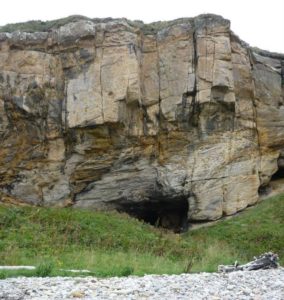
Known as Shanidar 1, the Neandertal remains were discovered in 1957 during excavations at Shanidar Cave in Iraqi Kurdistan by Ralph Solecki, an American archeologist and professor emeritus at Columbia University.

Previous studies of the Shanidar 1 skull and other skeletal remains had noted his multiple injuries. He sustained a serious blow to the side of the face, fractures and the eventual amputation of the right arm at the elbow, and injuries to the right leg, as well as a systematic degenerative condition.

In a new analysis of the remains, Trinkaus and Sébastien Villotte of the French National Centre for Scientific Research confirm that bony growths in Shanidar 1’s ear canals would have produced profound hearing loss. In addition to his other debilitations, this sensory deprivation would have made him highly vulnerable in his Pleistocene context.

As the co-authors note, survival as a hunter-gatherer in the Pleistocene presented numerous challenges, and all of those difficulties would have been markedly pronounced with sensory impairment. Like other Neandertals who have been noted for surviving with various injuries and limited arm use, Shanidar 1 most likely required significant social support to reach old age.

“The debilities of Shanidar 1, and especially his hearing loss, thereby reinforce the basic humanity of these much maligned archaic humans, the Neandertals,” said Trinkaus, the Mary Tileston Hemenway Professor.

https://source.wustl.edu/2017/10/shanidar/

The World’s Smallest Ornamental Beads Discovered in China

As reported in Shanghai Daily:  Four beads, made of a kind of eggshell and the smallest 1.26 millimeters in diameter, were discovered in an ancient site from the late Pleistocene dating between 8,000 and 12,000 years ago in the city of Qingtongxia.

All were smaller than 2 millimeters in diameter, archeologists said yesterday.

The excavation was conducted by Ningxia Institute of Cultural Relics and Archeology, the Institute of Vertebrate Paleontology and Paleoanthropology and the cultural relics administration of Qingtongxia from May to August.

“It is incredible that it can be so well processed with such a small diameter. It is rare among similar ornaments unearthed in other sites around the world,” said Wang Huimin, a researcher with the Ningxia institute.

Archeologists said the beads showed excellent craftsmanship and the aesthetic tastes of ancient humans. They said further research is needed to determine their exact purpose or meaning.

The Qingtongxia site is one of China’s top 10 archaeological finds of last year and has revealed more than 10,000 items, including stoneware, ornaments and plant seeds.


International Day to End Impunity for Crimes against Journalists

In the past eleven years close to 930 journalists have been killed for reporting the news and bringing information to the public. On average, this constitutes one death every four days. In nine out of ten cases the killers go unpunished. Impunity leads to more killings and is often a symptom of worsening conflict and the breakdown of law and judicial systems. UNESCO is concerned that impunity damages whole societies by covering up serious human rights abuses, corruption, and crime. Governments, civil society, the media, and everyone concerned to uphold the rule of law are being asked to join in the global efforts to end impunity.

The United Nations General Assembly adopted Resolution A/RES/68/163  (link is external)at its 68th session in 2013 which proclaimed 2 November as the ‘International Day to End Impunity for Crimes against Journalists’ (IDEI). The Resolution urged Member States to implement definite measures countering the present culture of impunity. The date was chosen in commemoration of the assassination of two French journalists in Mali on 2 November 2013.The United Nations General Assembly adopted Resolution A/RES/68/163 (link is external) at its 68th session in 2013 which proclaimed 2 November as the ‘International Day to End Impunity for Crimes against Journalists’ (IDEI). The Resolution urged Member States to implement definite measures countering the present culture of impunity. The date was chosen in commemoration of the assassination of two French journalists in Mali on 2 November 2013.


The Priceless Heritage of Cyrus the Great for Iranian People

Statement of Pasargad Heritage Foundation on Cyrus Day, Oct. 29, 2017.

For the fifteenth year we are approaching the Cyrus Day on October 29th which is the anniversary of the day when Cyrus the Great announced his Declaration of Human Rights on a clay cylinder. The occasion is celebrated by many people in and outside Iran. After many centuries, the Iranians have come to recognize the unique values of a great historical personality belonging to their motherland. They gather at his tomb and adjacent city and give tribute to his name and memory. These activities highlight the importance of this event and Cyrus Day. It is an important event which reflects the natural inclination of Iranian people in celebrating this day.

The reason behind this vast attention to Cyrus and his declaration is twofold. On one hand it is due to the elevation of peoples’ understanding of human rights in this age of information and, on the other, it is a reaction towards the harsh and difficult situation, created and imposed on them by the Islamic Republic.
Today in the 21st century and information age, human beings cannot (and should not) live under oppression and inhumane conditions. Humanity has survived centuries of bitter experiences and has been able to create a world that, though still full of pain and misery, is enlightened by that brilliantly crafted document called the Universal Declaration of Human Rights. Unfortunately, Iranians are today deprived of these very rights and, at the same time, have come to know that their ancient leader of 2550 years ago was the one who initiated the understanding of such rights. They compare the backward laws of Islamic Republic of Iran with Cyrus’ Declaration and their hearts are full of sorrow. Confronting the differences between the two sets of laws, makes them appreciate what Cyrus had done for his time.

Cyrus appears to be the first man in history who thought of his peoples’ rights, their freedom of religion and opinion, while negating slavery, releasing slaves and focusing on the well-being of his people. These facts cannot be ignored and these rights of Iranians should today be considered as part of their cultural heritage.
Iranians are cognizant that Cyrus was neither a prophet nor a saint. He did not walk on water, could not resuscitate the dead and was unable to cause splitting of the moon. Nevertheless, by giving the people the right to choose their own religion, and therefore their destiny, he led the way in creating a nation of free decision makers. Thus, paying homage to him, especially in a time when his children are deprived of their basic rights, becomes ever more significant and timely.

Pasargad Heritage Foundation, the entity that first suggested the observance of Cyrus Day, 15 years ago, invites all Iranians and Iran-lovers to pay their tributes to Cyrus wherever they are and celebrate his day with more glory and splendor than ever before. They are invited to contemplate the role Cyrus played in the history of humanity by bestowing the human race a declaration that could bring them happiness, peacefulness, and tolerance.

With love and best wishes for everyone.

Shokooh Mirzadegi
Pasargad Heritage Foundation
www.savepasargad.com


Crops Evolving 10 Millennia Before Experts Thought

UNIVERSITY OF WARWICK —Ancient hunter-gatherers began to systemically affect the evolution of crops up to thirty thousand years ago – around ten millennia before experts previously thought – according to new research by the University of Warwick.

Professor Robin Allaby, in Warwick’s School of Life Sciences, has discovered that human crop gathering was so extensive, as long ago as the last Ice Age, that it started to have an effect on the evolution of rice, wheat and barley – triggering the process which turned these plants from wild to domesticated.

In Tell Qaramel, an area of modern day northern Syria, the research demonstrates evidence of einkorn being affected up to thirty thousand years ago, and rice has been shown to be affected more than thirteen thousand years ago in South, East and South-East Asia.

Furthermore, emmer wheat is proved to have been affected twenty-five thousand years ago in the Southern Levant – and barley in the same geographical region over twenty-one thousand years ago.

The researchers traced the timeline of crop evolution in these areas by analysing the evolving gene frequencies of archaeologically uncovered plant remains.

Wild plants contain a gene which enables them to spread or shatter their seeds widely. When a plant begins to be gathered on a large scale, human activity alters its evolution, changing this gene and causing the plant to retain its seeds instead of spreading them – thus adapting it to the human environment, and eventually agriculture.

Professor Allaby and his colleagues made calculations from archaeobotanical remains of crops mentioned above that contained ‘non-shattering’ genes – the genes which caused them to retain their seeds – and found that human gathering had already started to alter their evolution millennia before previously accepted dates.

The study shows that crop plants adapted to domestication exponentially around eight thousand years ago, with the emergence of sickle farming technology, but also that selection changed over time. It pinpoints the origins of the selective pressures leading to crop domestication much earlier, and in geological eras considered inhospitable to farming.

Demonstrating that crops were being gathered to the extent of being pushed towards domestication up to thirty thousand years ago proves the existence of dense populations of people at this time.

Professor Robin Allaby commented:

“This study changes the nature of the debate about the origins of agriculture, showing that very long term natural processes seem to lead to domestication – putting us on a par with the natural world, where we have species like ants that have domesticated fungi, for instance.”

Popular archaeology

Mehregan, The festivity of love, light and fidelity

Mehrgan is one of the greatest and most ancient national festivities of Iranian people, observed on October 7, to denote the beginning of autumn. It is an occasion to celebrate love, light and fidelity and Iranians have observed it for thousands of years.

Unfortunately, by the advent of the Islamic Revolution in Iran, all secular and popular festivities were banned and they were not allowed to be observed in public places. Nevertheless, and as far as it is possible, Iranians celebrate the occasion, far more expanded than the pre-revolution times. Outside Iran, millions of Iranians observe it vastly with enthusiasm and perseverance.

In 2010, the Pasargad Heritage Foundation (PHF), an NGO registered in USA, working for preservation of tangible and intangible heritage of Iran, applied to UNESCO for the registration of Mehrgan as a festivity with its roots in the soil of human regards for nature and mankind’s happiness.

This was a symbolic gesture because UNESCO only accepts those applications in this regard that are made by the governments. Thus, PHF has done so with the hope that in the future the road for Mehregan registration by UNESCO is paved and the bureaucratic procedures are facilitated.

World Teachers’ Day

The United Nations’ (UN) World Teachers’ Day celebrates the role teachers play in providing quality education at all levels. This enables children and adults of all ages to learn to take part in and contribute to their local community and global society.

Teachers are recognized for their contributions to society on World Teachers’ Day.©iStockphoto.com/Ekaterina Monakhova
What Do People Do?
Various events are arranged in many countries around the world on or around October 5. These include celebrations to honor teachers in general or those who have made a special contribution to a particular community. The day may also be marked by conferences emphasizing the importance of teachers and learning, extra training sessions for teachers, recruitment drives for the teaching profession among university students or other suitably qualified professionals and events to increase the profile of teachers and the role they play in the media.
Trade unions or other professional organizations that represent teachers play an important role in organizing World Teachers’ Day events in many countries. These include:
• The Australian Education Union.
• The Canadian Teachers’ Federation.
• The Elementary Teachers’ Federation of Ontario (Canada).
• The All India Secondary Teachers’ Federation.
• The Japan Teachers’ Union.
• The Teachers Council (New Zealand).
• The National Union of Teachers (United Kingdom).
• The National Association of Schoolmasters Union of Women Teachers (United Kingdom).
• The National Education Association (United States).
Moreover, international organizations such as TESOL (Teachers of English to Speakers of Other Languages) and Education International organize international, national and local events. In some areas posters are displayed and pupils and ex-pupils are encouraged to send e-cards or letters of appreciation to teachers who made a special or memorable contribution to their education.
Background
On October 5, 1966, the Special Intergovernmental Conference on the Status of Teachers in Paris, France, was closed and the “Recommendation concerning the Status of Teachers” was signed by representatives of UNESCO and International Labour Organization. On October 12, 1997, the 29th session of UNESCO’s General Conference was opened. During this conference, on November 11, 1997, the “Recommendation concerning the Status of Higher Education Teaching Personnel” was adopted.
On October 5, 1994, the first World Teachers’ Day was held. This event has been organized on the same date each year since then. However, local events may be on some other date close to October 5, so that they do not fall during fall (northern hemisphere) or spring (southern hemisphere) school vacations. In 2002, Canada Post issued a postage stamp to commemorate World Teachers’ Day.