 The United Nations’ (UN) International Day of Democracy is annually held on September 15 to raise public awareness about democracy. Various activities and events are held around the world to promote democracy on this date.
Background
The UN strives to achieve its goals of peace, human rights and development. It believes that human rights and the rule of law are best protected in democratic societies. The UN also recognizes a fundamental truth about democracy everywhere – that democracy is the product of a strong, active and vocal civil society.
The UN general assembly decided on November 8, 2007, to make September 15 as the annual date to observe the International Day of Democracy. The assembly invited people and organizations, both government and non-government, to commemorate the International Day of Democracy. It also called for all governments to strengthen their national programs devoted to promoting and consolidating democracy. The assembly encouraged regional and other intergovernmental organizations to share their experiences in promoting democracy.
The International Day of Democracy was first celebrated in 2008. The UN general assembly recognized that the year 2008 marked the 20th anniversary of the first International Conference of New or Restored Democracies, which gave people a chance to focus on promoting and consolidating democracy worldwide.
News
International Day of Clean Air for Blue skies
 The Day aims to:
1. Raise public awareness at all levels—individual, community, corporate and government—that clean air is important for health, productivity, the economy and
the environment.
2. Demonstrate the close link of air quality to other environmental/ developmental challenges such as – most and foremost – climate change and the global Sustainable Development Goals.
3. Promote and facilitate solutions that improve air quality by sharing actionable
knowledge best practices, innovations, and success stories.
4. Bring together diverse international actors working on this topic to form a
strategic alliance to gain momentum for concerted national, regional and
international approaches for effective air quality management.
The United Nations General Assembly adopted the resolution to hold an International
Day of Clean Air for blue skies on December 19, 2019, during its 74th session and
invited the United Nations Environment Programme ( UNEP ) to facilitate the observance of the International Day, in collaboration with other relevant organizations. The Climate and Clean Air Coalition ( CCAC ) worked with UNEP and the Republic of Korea to advocate for the day in the lead up to the decision.
Radiocarbon dating and CT scans reveal Bronze Age tradition of keeping human remains
 Using radiocarbon dating and CT scanning to study ancient bones, researchers have uncovered for the first time a Bronze Age tradition of retaining and curating human
remains as relics over several generations.
While the findings, led by the University of Bristol and published in the journal Antiquity, may seem eerie or even gruesome by today’s convention, they indicate a tangible way of honouring and remembering known individuals between close communities and generations some 4,500 years ago.
“Even in modern secular societies, human remains are seen as particularly powerful
objects, and this seems to hold true for people of the Bronze Age. However, they treated and interacted with the dead in ways which are inconceivably macabre to us today,” said lead author, Dr Thomas Booth, who carried out the radiocarbon dating work at the university’s School of Chemistry.
“After radiocarbon dating Bronze Age human remains alongside other materials buried
with them, we found many of the partial remains had been buried a significant time after
the person had died, suggesting a tradition of retaining and curating human remains.”
“People seem to have curated the remains of people who had lived within living or
cultural memory, and who likely played an important role in their life or their communities, or with whom they had a well-defined relationship, whether that was direct
family, a tradesperson, a friend or even an enemy, so they had a relic to remember and
perhaps tell stories about them,” said Dr Booth.
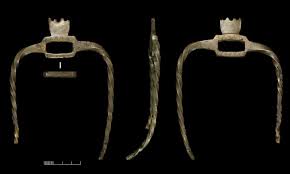
In one extraordinary case from Wiltshire, a human thigh bone had been crafted to make a musical instrument and included as a grave good with the burial of a man found close to Stonehenge. The carefully carved and polished artefact, found with other items, including stone and bronze axes, a bone plate, a tusk, and a unique ceremonial pronged object, are displayed in the Wiltshire Museum. Radiocarbon dating of this musical instrument suggests it belonged to someone this person knew during their lifetime.
“Although fragments of human bone were included as grave goods with the dead, they
were also kept in the homes of the living, buried under house floors and even placed on
display,” said Professor Joanna Brück, principal investigator on the project, and Visiting
Professor at the University of Bristol’s Department of Anthropology and Archaeology.
“This suggests that Bronze Age people did not view human remains with the sense of
horror or disgust that we might feel today.”
The team also used microcomputed tomography (micro-CT) at the Natural History
Museum to look at microscopic changes to the bone produced by bacteria, to get an
indication of how the body was treated while it was decomposing.
“The micro-CT scanning suggested these bones had come from bodies that had been
treated in similar ways to what we see for Bronze Age human remains more generally.
Some had been cremated before being split up, some bones were exhumed after burial, and some had been de-fleshed by being left to decompose on the ground,” Dr Booth said.
“This suggests that there was no established protocol for the treatment of bodies whose
remains were destined to be curated, and the decisions and rites leading to the curation of their remains took place afterwards.”
There is already evidence people living in Britain during the Bronze Age practiced a
range of funerary rites, including primary burial, excarnation, cremation and
mummification. However, this research reveals the dead were encountered not just in a
funerary context, but that human remains were regularly kept and circulated amongst the living.
These findings may tell us something about how Bronze Age communities in Britain
drew upon memory and the past to create their own social identities. Unlike our regard
for saintly relics today, they do not seem to have focused on very old human remains and the distant past of ancestors, rather they were concerned with the remains of those within living memory.
“This study really highlights the strangeness and perhaps the unknowable nature of the
distant past from a present-day perspective. It seems the power of these human remains lay in the way they referenced tangible relationships between people in these
communities and not as a way of connecting people with a distant mythical past,” said Dr. Booth.
https://phys.org/news/2020-08-radiocarbon-dating-ct-scans-reveal.html
Archaeologists Find Unique 1,400-Year-Old Christian Artifact
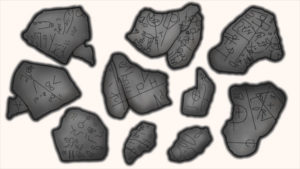 A total of 14 fragments from the ancient vessel were found hidden in the remains of a 6th century Christian church, inside the previously occupied Roman fort of Vindolanda.
“This is a really exciting find from a poorly understood period in the history of Britain,” said lead author Dr. David Petts , a researcher in the Department of Archaeology at Durham University.
“Its apparent connections with the early Christian church are incredibly important, and
this curious vessel is unique in a British context.”
“It is clear that further work on this discovery will tell us much about the development of
early Christianity in beginning of the medieval period.”
Each fragment of the ancient chalice was found to be covered by lightly etched symbols, each representing different forms of Christian iconography from the time.
The marks appear to have been added, both to the outside and the inside of this cup, by the same hand or artist and although they are now difficult to see with the naked eye, with the aid of specialist photography, the symbols have been carefully recorded and work has started on a new journey of discovery to unlock their meanings.
The etchings include some well-known symbols from the early church including ships,
crosses and chi-rho, fish, a whale, a happy bishop, angels, members of a congregation,
letters in Latin, Greek and potentially Ogam.
Fragments of the 1,400-year-old Christian chalice found at Vindolanda in
Northumberland, northern England. Image credit: Vindolanda Trust.
“We are used to first’s and the wow factor from our impressive Roman remains at
Vindolanda with artifacts such as the ink tablets, boxing gloves, boots and shoes, but to
have an object like the chalice survive into the post-Roman landscape is just as
significant,” said Dr. Andrew Birley , director of excavations and CEO of the Vindolanda
Trust.
“Its discovery helps us appreciate how the site of Vindolanda and its community survived beyond the fall of Rome and yet remained connected to a spiritual successor in the form of Christianity which in many ways was just as wide reaching and transformative as what had come before it.”
“I am delighted that we can now start to share our news about this discovery and shed
some light on an often-overlooked period of our heritage and past.”
http://www.sci-news.com/archaeology/christian-chalice-vindolanda-08803.html
New Thoughts on Phoenician Figurines
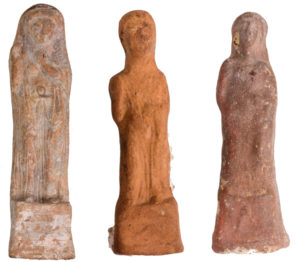 HAIFA, ISRAEL—Meir Edrey and his colleagues Adi Erlich and Assaf Yasur Landau, all of the University of Haifa, have analyzed pottery and clay figurines recovered in 1972
from an underwater site off the coast of western Galilee, according to a New York Times report. It had been previously thought that the hundreds of figurines and jars, which were
found in a jumble on the seafloor, were cargo on a Phoenician ship that sank in the Mediterranean Sea some 2,500 years ago. Edrey now suggests that the items, which vary in style, were deposited as offerings between the seventh and third centuries B.C. by members of a cult devoted to fertility and seafaring. Many of the figurines bear symbols associated with the mother goddess Tanit; dolphin symbols, which are also associated with Tanit; or depict a pregnant woman carrying a child. The researchers think the pottery may have been cast into the water as a ritual or a symbolic sacrifice. The position of the hands in some of the figurines, with the right hand upright and the left below the mouth, may indicate a vow in exchange for divine favor, Edrey added.
International Day against Nuclear Tests
 On 2 December 2009, the 64th session of the United Nations General Assembly declared 29 August the International Day against Nuclear Tests through the unanimous adoption of its resolution 64/35 . The Preamble of the resolution emphasizes that “every effort should be made to end nuclear tests in order to avert devastating and harmful effects on the lives and health of people” and that “the end of nuclear tests is one of the key means of achieving the goal of a nuclear-weapon-free world.”
The main mechanism for eradicating nuclear weapons testing is the Comprehensive
Nuclear-Test-Ban Treaty (CTBT) . It was adopted by the United Nations General
Assembly on 10 September 1996. To date, 184 countries have signed the treaty and 168 have ratified it. For the Treaty to enter into Force, it must be ratified by those States with significant nuclear capabilities.
While the general consensus within the international community is that nuclear weapons tests pose life-threatening risks, there still exists to some degree a lingering suspicion of the possibility of clandestine nuclear weapons testing. There is also a concern that if nuclear weapons cannot be tested their reliability may be in jeopardy. However, over the years, advances in science and technology have exponentially boosted the capacity to monitor and verify compliance mechanisms and nuclear weapons proliferation detection. These activities and tracking tools have been initiated and developed by the Provisional Technical Secretariat of the CTBT Organization (CTBTO) Preparatory Commission. Despite the stalled entry-into-force, an increasingly robust public advocacy, including activities and events undertaken on the International Day against Nuclear Tests, is exerting pressure on the powers-that-be to move forward on the ratification of the treaty with a view towards the ultimate eradication of nuclear weapons testing.
The Preparatory Commission of the CTBTO and its 168 ratifying States vigorously
continue to push for the Treaty’s entry into force. The CTBTO’s International Monitoring
System, already encompassing nearly 90 per cent of States, provides confidence that no nuclear explosion will escape detection.
However, nothing can play as crucial a role in avoiding a nuclear war or nuclear terrorist
threat as the total elimination of nuclear weapons. Bringing an irreversible end to nuclear explosions will prevent the further development of nuclear weapons.
Siberia’s Paleolithic Ivory Carvings Analyzed
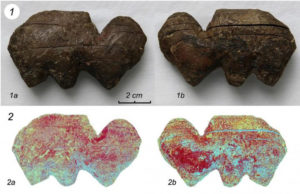 NOVOSIBIRSK, RUSSIA—Drills, cutters, and leveling blades were employed more than 20,000 years ago to carve the mammoth-ivory figurines and beads recovered from
south-central Siberia’s Ust-Kova site, according to a statement released by Siberian Federal University . L.V. Lbova of Novosibirsk State University and Nikolay Drozdov of Siberian Federal University and their colleagues studied markings on the figurines and jewelry under a microscope in order to identify the tools that had been used to shape them. They then used those tools to recreate the objects and the markings. Chemical analysis of the ancient carvings indicates that the sculptures were painted with manganese and magnesium that was probably extracted from salt rocks located near the archaeological site. A figurine depicting a mammoth, for example, had been painted red on one side and black on the other. Layers of pigment on the beads suggest they were regularly repainted over many years. The researchers think that tool use studies could help them to identify the styles of individual master carvers, while a comparison of carving techniques between different archaeological sites in the region could offer information about relationships between the groups who once lived there
Monkeys from India Identified in Roman Pet Cemetery in Africa
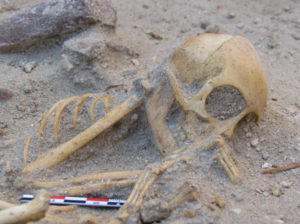 According to a report in The First News , carefully buried monkeys uncovered in an animal cemetery at the Red Sea port city of Berenice have been identified as rhesus
macaques, likely to have been imported by the Romans from India. It had been previously thought that the monkeys were guenons, which are local to the region, until
zooarchaeologist Marta Osypińska of the Polish Academy of Sciences and her colleagues used 3-D scans of the bones to compare them with those of other species. “This is a unique finding,” Osypińska said. “Until now, no one has found Indian monkeys in the archaeological sites in Africa. Interestingly, even ancient written sources don’t mention this practice.” After surviving the weeks-long journey across the Indian Ocean and the Red Sea, she added, the rhesus macaques died young, probably because the diet they were fed in Berenice lacked necessary nutrients. All of the rhesus macaques in the cemetery were arranged in their graves as if they were sleeping. One had been covered with woolen fabric. Shells from the Indian Ocean, amphora fragments, a piglet skeleton, and three kitten skeletons were also recovered from the monkey burials.
Cruel medieval custom submitted for registration as intangible cultural heritage
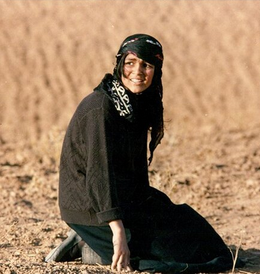 Recently, Chief Justice Sadegh Jafari Chegni of Shush in Khuzestan Province, stated that his office was submitting an inhumane tradition called “Khoon Bas” to the Iranian Heritage Office for registration of the practice as an “intangible cultural heritage” of Iran.
“Khoon Bas” is a medieval custom for some tribes in different countries, including medieval Iran. This custom was performed after a clash between two tribes involved in war and bloodshed.
Tribal elders would then give one or more daughters from the victim’s tribe (from infancy) to the tribe that won the war, in order to stop the process of bloodshed and to put an end to any future conflict or revenge. However, the pardoned girl or girls who were married to the men of the slain tribe no longer had any rights, and were in fact sexually, physically, and mentally abused as slaves.
This awful and inhumane custom gradually disappeared and became illegal during the Pahlavi era. Unfortunately, after the Islamic Revolution, it was re-enacted because it was supported by Iranian government officials, similar to issues such as female circumcision, concubines, or religious prostitution, and other cruel and anti-woman rituals.
The officials of the Islamic government intend to register these kinds of customs as “Iranian cultural heritage” and intend to send them to the United Nations Educational, Scientific and Cultural Organization (UNESCO) to be placed on the world’s list of intangible cultural heritage.
Fortunately, recent protests by men and women who love Iranian culture and are against the registration of such horrific rituals have led to UNESCO formally asking the Cultural Heritage Organization of the Islamic Republic to stop the registration of such inhumane and anti-woman practices.
Yesterday however, the Chief Justice of Shush continued to stand by his previous statements and called UNESCO’s reaction “narrow-minded.”
International Day for the Remembrance of the Slave Trade and its Abolition
 The night of 22 to 23 August 1791, in Santo Domingo (today Haiti and the Dominican Republic) saw the beginning of the uprising that would play a crucial role in the abolition
of the transatlantic slave trade.
It is against this background that the International Day for the Remembrance of the Slave Trade and its Abolition is commemorated on 23 August each year.
This International Day is intended to inscribe the tragedy of the slave trade in the
memory of all peoples. In accordance with the goals of the intercultural project “The
Slave Route”, it should offer an opportunity for collective consideration of the historic
causes, the methods and the consequences of this tragedy, and for an analysis of the
interactions to which it has given rise between Africa, Europe, the Americas and the
Caribbean.
The Director-General of UNESCO invites the Ministers of Culture of all Member States
to organize events every year on that date, involving the entire population of their country and in particular young people, educators, artists and intellectuals.
International Day for the Remembrance of the Slave Trade and its Abolition was first
celebrated in a number of countries, in particular in Haiti (23 August 1998) and Goree in
Senegal (23 August 1999). Cultural events and debates too were organized. The year
2001 saw the participation of the Mulhouse Textile Museum in France in the form of a
workshop for fabrics called “Indiennes de Traite” (a type of calico) which served as
currency for the exchange of slaves in the seventeenth and eighteenth centuries.
Circular CL/3494 of 29 July 1998 from the Director-General to Ministers of Culture
invites all the Member States to organize events to mark 23 August each year.