News
Qeshm Geo-Park
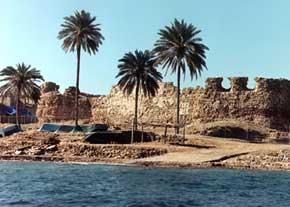
The Qeshm’s Geo-Park is the only Middle Eastern geo-park that has been listed by UNESCO. This park because of negligence and standards that these parks need to have has received a red warning card from the UNESCO. The red card is given as a warning that unless the list of warnings are not followed and corrected the park could be taken off the UNESCO’s list of natural national heritage list.
After giving a yellow card (which is the first warning) to the management of the park and giving them 2 years to help and bring the park to the original standards and up keeping, the park was given a red card in Jan 2013. This was due to the lack of the response from the management of the park.
UNESCO had asked for a number of things to be done to bring the park back to the original conditions under which the park was listed as a natural national heritage park. These include: 1) creating signs throughout the park for better guidance of visitors, b) building more roads for the tourists to get to the park, c) creating hotels or places for tourists to stay close to the park, d) unapproved structures that were either blocking views or access to the park, e) close proximity to mines that were established later and after the UNESCO’s designation, f) destruction of beaches and selling of sand by the management of the park.
Mr. Bijan Darreh-shuri, one of the important people natural national heritage in Iran and the person who had with tremendous effort and work created this Geo-park in Iran, in a conversation with Save Passargad.com said “that the managers of Qeshm did not realize the great importance of this area for tourism and did not do what was needed. “When we were there our management team was very strong and responsible and felt responsible before the people and the future of Iran and for that area. Qeshm is an amazing geological area with vegetation and ecological importance that is about 100,000 acres. For example Qeshm annually hosts 400 white pelican a year and these birds are so rare and currently extinct as only 1000 of them remain in the world. And Qeshm is also one of the areas of the world that still remains a habitat for turtles. … But unfortunately after we left, other people came in and did not feel the same. Their irresponsible behavior led to the park being delisted by the UNESCO. ” Mr. Darreh-Shuri said. In spite of this, Mr.Darreh-shuri says that:” I am positive that if the managers even now attempt to rectify and correct the past mistakes, the UNESCO will once again list the Qeshm’s Geo-park as a national environmental heritage.”
Jewish historical manuscripts found
 (photo credit: AP/The National Library of Israel)
The Jewish manuscripts which are believed to about 1,000 years old reveal details of a thriving Jewish society in what was then parts of Persian Empire.(http://www.nytimes.com/2013/01/15/world/middleeast/documents-illuminate-jewish-life-in-ancient-muslim-empire.html?_r=0). The manuscripts were reportedly found in a cave in the mountainous northern area of Afghanistan and look very well preserved possibly because of the dry conditions in the cave. The manuscripts show details about the cultural, economic and religious life of the Jewish society at the time. The documents reportedly contain writings in Hebrew, Aramaic, Judeo-Arabic, and the unique Judea-Persian language of that era.
Susa* is invaded by termites
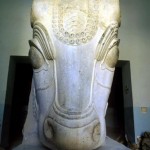
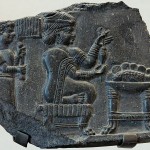
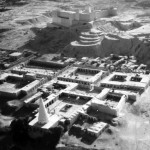
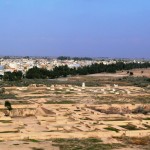
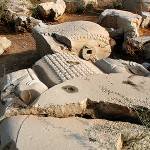
Recent news from Susa, one of the world’s oldest cities, show the evidence of termite infestation in the hall where the ancient artifacts are kept.
Ehsan Yaghmaei, a prominent Iranian archeologist who supervises the excavations in numerous old castles in Susa and is considered as the discoverer of Bardak-e-Siah Palace, an Archimedes remains, has told the ISNA, a government reporting agency that: “There is so much bad news about Susa that the invasion of the termites could be considered just a negligible event!”
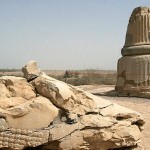
He reports about the vast destructions that have taken place in the ancient sites of Susa and refers to the fact that these sites are now used as sheep pasture and a gathering place for the addicts.
He says: “At this moment, the Susa sites are neither under the supervision of local Cultural Heritage officers nor any other authority. They are now in the hands of those who are constructing a hotel right on the ancient site.”
————–
*Susa (Persian: ý Shush) was an ancient city of the, Elamite, Persian and Parthian empires of Iran. It is located in the lower Zagros Mountains about 250 km (160 mi) east of the Tigris River. The modern Iranian town of Shush is located at the site of ancient Susa. Shush is the administrative capital of the Shush County of Iran’s Khuzestan province.
Prominent Cultural Figure of Iran has Passed Away

Morteza Saghebfar, one of the prominent cultural figures of Iran, died on Dec. 31. 2012, at the age of 70. His works, as a sociologist and an expert on Iranian history and culture, as well as his translation of many books in these areas, are considered as major sources of reference.
Freedom Tower in Danger
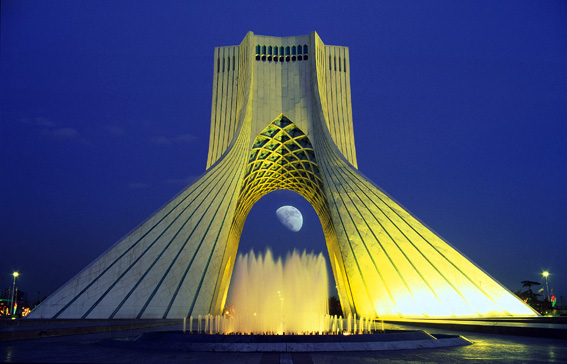
Shahyad monument in Tehran, Iran, that was renamed as Freedom Tower (Borj-e-Azadi) is in a bad shape due to having been left without care for a long time.
Destruction in War and Peace
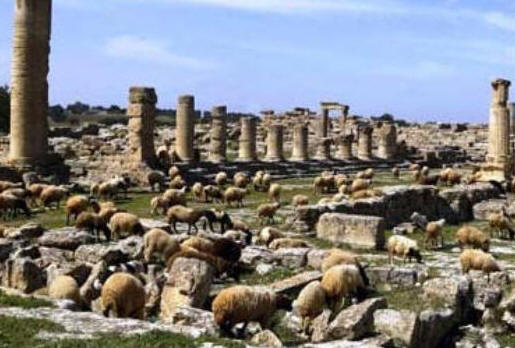
Cyrene, the ancient city in Libya is turned into pasture for sheep due to the war and negligence.
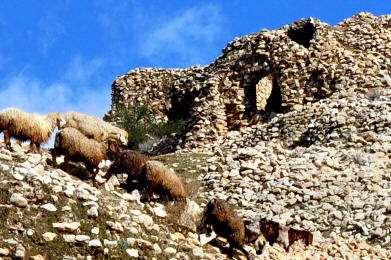
Virgin Castle (Ghal’e ye Dokhtar), the ancient fortification in Bishabour, Iran, has been turned into a pasture for sheep due to negligence of authorities.
73 Million Year Old Fossil Discovered
 According to a report from Azad University of Kermanshah, Runak Gravandi, a doctorate student and a member of geology department, has succeeded in discovering a kind of 73-million-year old fossil, in the neighborhood of Kermanshah (Western part of Iran)
Runak Gravandi, while commenting on her discovery, said, “ While executing scientific research in the areas near Kermanshah I discovered a few sample of coral fossils, as well as some non-coral ones.” She acknowledged, “In order to validate this discovery, I contacted Professor Mohammad al-Jamil, a famous geologist at Cairo University. After examining the samples and the relevancy of information about them, he agreed that the fossils are 73 million years showing that Kermanshah was a part of a shallow see during that period.”
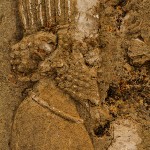
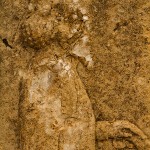
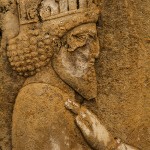
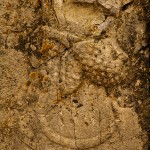
Persepolis is in danger
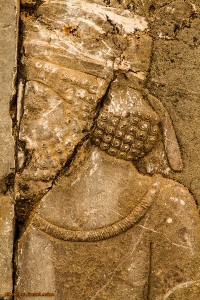
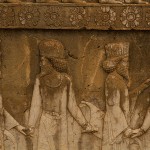
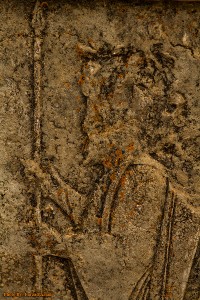 Persepolis is in danger of extinction.*

Pictures by: Farzad Aryan
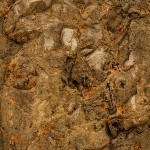
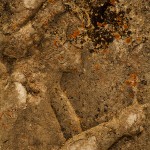
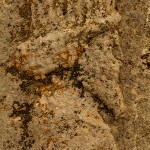
Due to the intentional negligence of the authorities with no attempt to stop the natural wear and tear of the site, Persepolis is eroding rapidly.
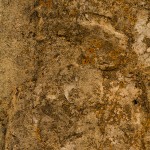
Newest pictures show how humidity and the growing lichens are threatening the ancient bas-reliefs.
*Persepolis was the ceremonial capital of the Achaemenid Empire (ca. 550–330 BCE). Persepolis is situated 70 km northeast of the modern city of Shiraz in the Fars Province of modern Iran. The earliest remains of Persepolis date from around 515 BCE. UNESCO declared the citadel of Persepolis a World Heritage Site in 1979.
(Click on the photo to see a close up of the damage)
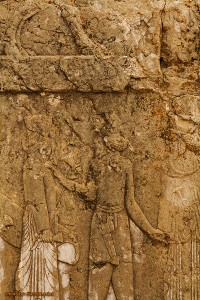
The sad situation of Arc of the Garden (Tagh-e-Bostan) in Iran
Tagh-e-Bostan is a magnificent site of ancient history in the western Iranian plateau. Reza Kamali from Tehran reports that 7 years ago, immediately after the advent of a popular movement to apply for the recognition of the site by the UNESCO as a World Heritage, a series of unexpected operations began to happen in and on the vicinity of this site with the clear aim of its destruction and stopping such recognition.
All sorts of so-called “development projects” were introduce, including the construction of a rail-road and erecting a large dome on a near by religious site that altered the whole scenery of Tagh-e-Bostan eliminating the chances of the site to be recognized as a World heritage.
Keeping the main parts of the site exposed to natural elements was another neglecting policy.
When finally last year the Cultural Heritage Organization declared that it has decided to apply to UNESCO and intends to “prepare” the site for that reason, it turned the whole site into a construction site and brought in machinery and untrained work force – a situation that resembled a mining operation rather than repairing an ancient site. Then the surprising part of the story was the revealed. The Organization declared it never had the intention of sending the Tagh-e-Bostan file to UNESCO.
Immediately all the previous reports and news items relevant to Tagh-e-Bostan was removed from the Internet sites controlled by the government.
The devastation inflicted on Tagh-e-Bostan is so extensive that even if an authority would decide to apply for recognition by the UNESCO, it will not pass the criteria used to select a site for that purpose.