We believe that all cultural, historical and natural heritage, wherever they are should be preserved. LEARN MORE
News

Default Category

Newest Photos from Lake Urmia

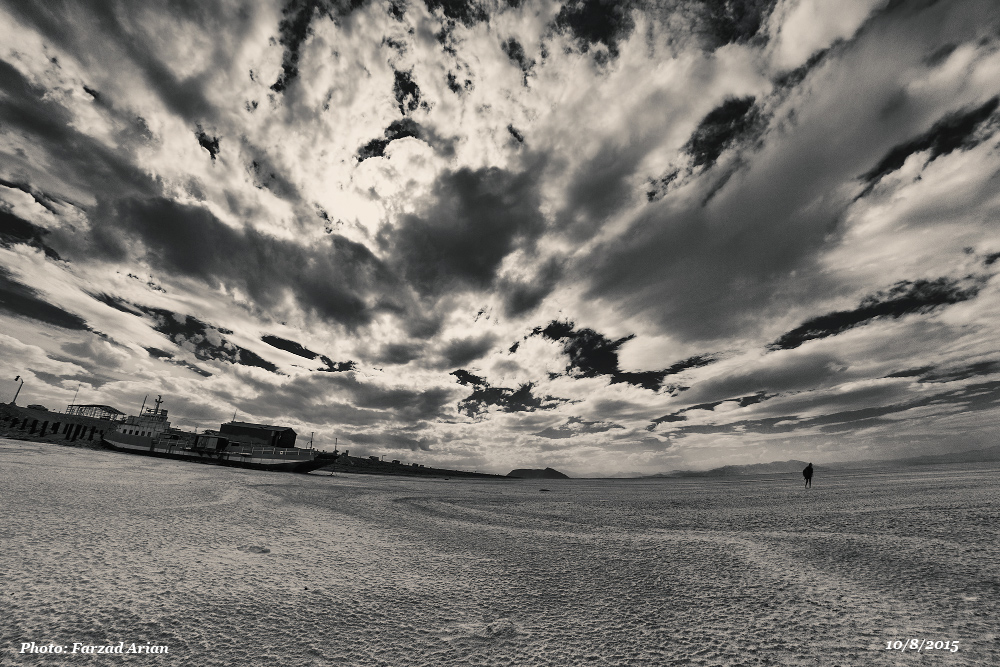
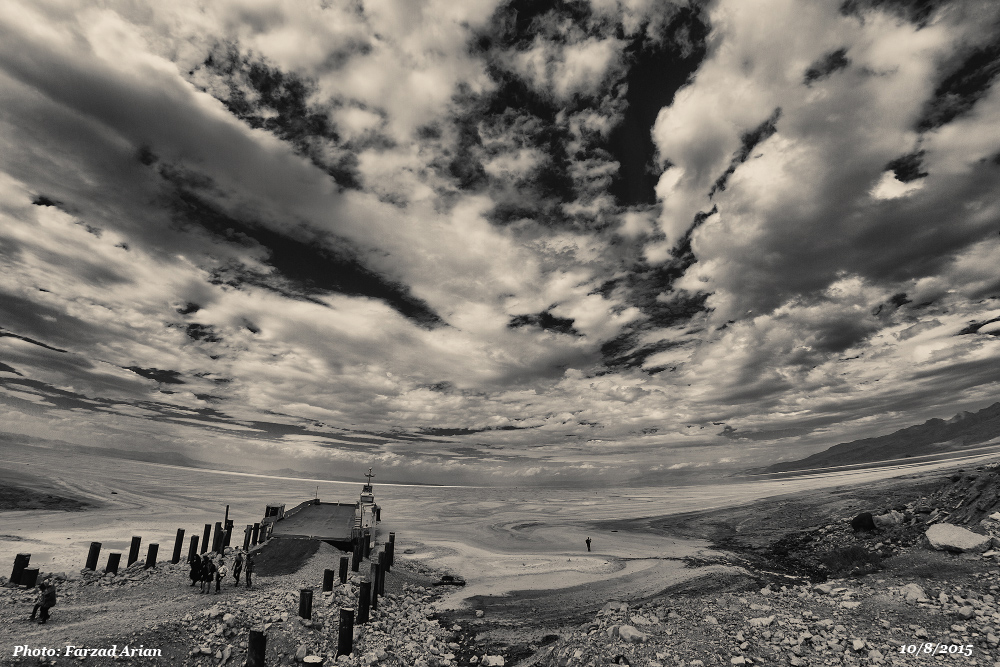
Farzad Arian-Lake Urmia3 Farzad Arian-Lake Urmia-4Lake Urmia, once ranked as the sixth largest saltwater lake in the world, and the largest in the Middle East in 2003, is now almost 88% dried up. Due to poor water management, aggressive agricultural policies, and careless construction of dams and bridges and the total negligence of the Environment Organization of Iran.

Destruction of Sasanid Remains

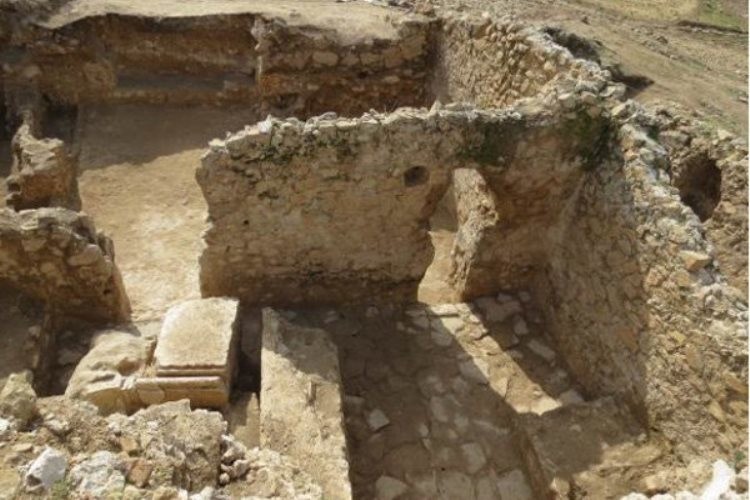
A large collection of historical heritage of Iran is on the verge of annihilation by a newly-built dam. Iranian news agencies have reported that the flooding of the “Langir Dam” in Ilam, a Kurdish city of Iran, has began. The resulting lake would drown many invaluable Sasanid remains such as a summer palace, some tribal structures, three large sites, tile-making kilns, etc.
The authorities in Cultural Heritage Organization say that the flooding has begun without their permission but some cultural activists do not believe that such a major work by the contractors could be implemented without government authorities’ consent.Ilam

Vandalized Stone relief

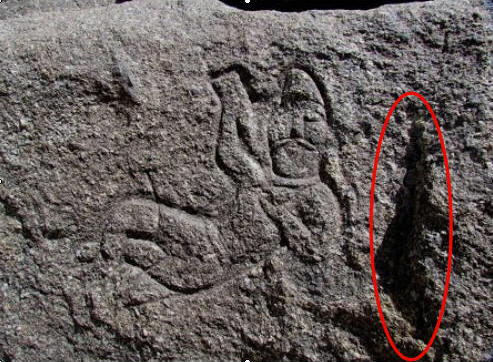
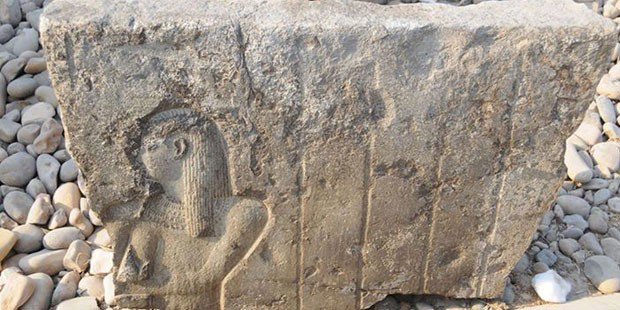
sangne1According to a cultural activist in Hamedan, Iran, certain parts of a bas-relief belonging to the period of the Parthian Dynasty in ancient Iran (247 BC – 224 AD) has been chipped and fragmented by unknown people.

The scene on the bas-relief depicts a man, leaning on a cushion, holding a goblet. He is wearing Mithraism hat, belt and outfit.

It seems that unknown people have unsuccessfully tried to clear around the bas-relief with explosive material.

This ancient work was registered as a national heritage in 2014. No relevant authority has shown any reaction to this unfortunate incident.

The notable fact is that the villagers living around this site had seen this bas-relief for centuries without attempting to destroy or disfigure it, but only one year after its registration as a national artifact those who are either known as “unauthorized excavator,” or the smuggler of antiques, appear on the site with explosives and no one seems to care!

Discovery of a 2,400 year old Ancient Shrine in Cairo

Egypt-Iunu-templeA team of Egyptian and German archaeologists discovered the remains of a limestone colonnade and a well-preserved ceiling in Cairo’s modern district of Mataria. The 2,400-year-old building is thought to have been a shrine that was surrounded by a mud brick wall and located in the ancient capital city of Heliopolis, or Iunu. “The shrine belonged to the 30th Dynasty Pharaoh Nectanebo I (379 B.C. – 360 B.C.),” Antiquities Minister Mamdouh el-Damaty announced in a press conference reported in The Cairo Post. Nectanebo I founded the 30th Dynasty, which was the last Egyptian royal family to rule Egypt before it was conquered by Alexander the Great in 332 B.C.

Suspect in destruction of Timbuktu mausoleums sent to ICC

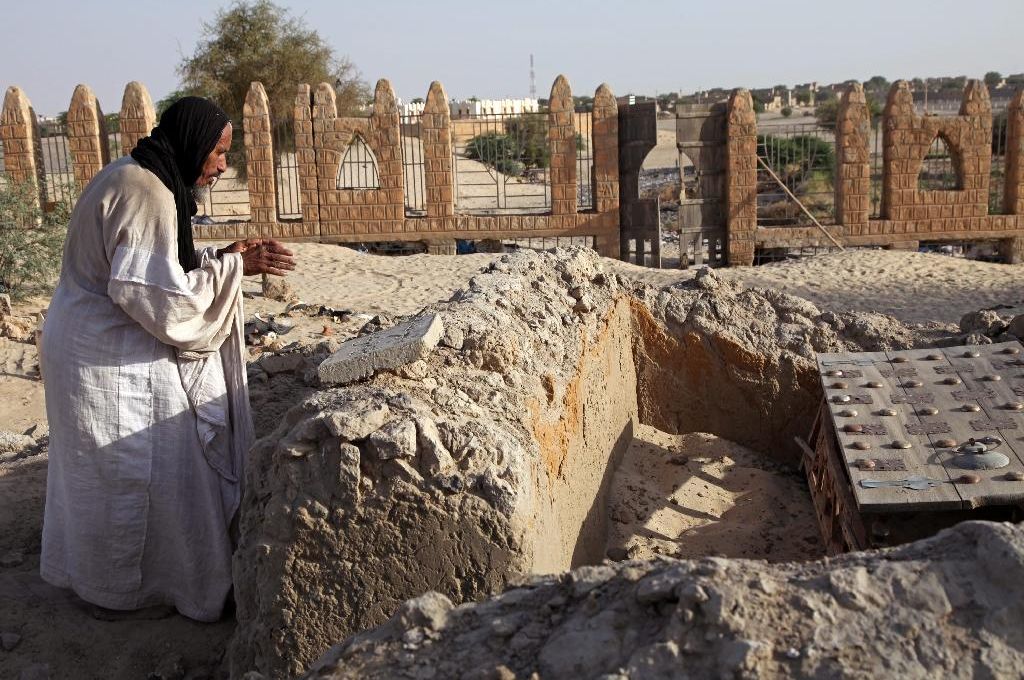
As reported by the Associated Press (AP), the main suspect in the destruction of Mali’s historic city of Timbuktu has been arrested and been sent to the International Criminal Court (ICC). This is the first time that a suspect is being tried and sent to ICC for war crime, for deliberately destroying religious or historical monuments and a World Heritage Site.

Mali’s government asked the court in 2012 to investigate crimes committed on its territory, and the prosecutors opened an investigation in 2013. However, this individual is the first suspect detained but the government of Mali believes that he is not the only person responsible for the destructions of the Heritage sites. The officials have announced that they believe that this is the start of a trial against the people who destroyed the Timbuktu mausoleums, and they expect other individuals will be tried too.

The suspect is charged in the destruction of 10 historic buildings, including mausoleums and a mosque in Timbuktu. Niger sent him to the court based on an arrest warrant issued a week ago and he was transferred to The Hague early Saturday. No date was immediately set for his arraignment.

The entire city of Timbuktu is listed as a World Heritage Site by UNESCO. At the peak of its influence in the 15th and 16th centuries, Timbuktu counted 180 schools and universities that received thousands of students from all over the Muslim world.

Islamic extremists who overran Timbuktu in 2012 destroyed 14 of the city’s 16 mausoleums, one-room structures that house the tombs of the city’s great thinkers. The extremists condemned the buildings as totems of idolatry. The 14 mausoleums have since been restored by the United Nations.

The militants were driven out after nearly a year by a French military intervention.

“Today’s arrest signals that there will be a price to pay for destroying the world’s treasures,” said Corrine Dufka of Human Rights Watch’s Africa division, as stated in the AP article.


Satellite Confirms Palmyra’s Temple of Bel has Been Destroyed

Temple_of_Bel,_Palmyra_03A week after reports of destruction by Islamic State militants in the ancient city of Palmyra in Syria, the most recent reports verify that ISIS militants has destroyed temple of Bel.
The Syrian Observatory for Human Rights, an activist and monitoring group based in Britain said Sunday that ISIS militants has destroyed the nearly 2,000-year-old temple. The Temple Bel was an ancient stone ruin located in Palmyra. The temple was dedicated to the Semitic god Bel, worshipped at Palmyra in triad with the lunar god Aglibol and the sun god Yarhibol, and it formed the center of religious life in Palmyra and was dedicated in 32 CE.

Earlier today as reported by BBC and a number of other sites, the satellite images confirm that a temple in the ancient Syrian city of Palmyra has been destroyed, the United Nations says.

Baal Shamin Temple in Palmyra Destroyed by Isis


Temple_of_Baal-Shamin,_Palmyra-2010Temple of baal-shamin-palmira-temple-2015The Islamic State group on Tuesday August 25 2015 published images showing the destruction of the Baal Shamin temple in Syria’s Palmyra, after international condemnation of the act.

The series of images showed militants placing barrels and small containers, presumably containing explosives, into the temple, as well as similar containers placed on parts of its columns.

The Temple of Baalshamin was an ancient temple in the city of Palmyra, Syria, dedicated to the Canaanite deity Baalshamin. The temple’s earliest phase dates to the late 2nd century BC. It was rebuilt in 131 AD, while the altar before the temple is dated to 115 AD. With the advent of Christianity in the 5th century AD, the temple was converted to a church. Uncovered by Swiss archaeologists in 1954–56, the temple was one of the most complete ancient structures in Palmyra.

In 1980, the structure was designated by UNESCO as a World Heritage Site. As UNESCO puts it, “the art and architecture of Palmyra, standing at the crossroads of several civilizations, married Graeco-Roman techniques with local traditions and Persian influences.”

The head of the UN’s cultural watchdog, Irina Bokova, called the act a “new war crime and an immense loss for the Syrian people and for humanity.”

Palmyra ancient ruins are a UNESCO World Heritage site and IS’s capture of the town on May 21 raised concerns the group would lay waste to it as it has done with heritage sites under its control elsewhere.

Historical Section of Sana’a, Yemen Recently Destroyed

sana'aA historic section of the capital of Yemen, Sana’a, which has recently become a stronghold for Houthi rebels was bombed on May 11th by a coalition of Saudi-led Arab states. The World Heritage site that has been inhabited for more than two Milena contains over 6,000 houses, hammams, and mosques built before the eleventh century, and was recently restored by UNESCO in  the 1980s. It is one of the four World Heritage sites in Yemen and have been on the UNESCO tentative list for 13 years.

The coalition also carried out several airstrikes in Saa’dah, partially destroying Al-Hadi Mosque, the oldest Islamic learning center in the center of the Arabian Peninsula at 1,100 years old, and on the  city of Barakish. “I condemn these destruction and I call on all parties to keep cultural heritage out of the conflict,” says UNESCO Director-General Irina Bokova in a statement that asked those fighting to respect international treaties, namely, the 1954 UNESCO Convention on the Protection of Cultural Property in the Event of Armed Conflict and the 1972 World Heritage Convention. “I am particularly distressed by the news concerning air strikes on heavily populated areas such as the cities of Sana’a and Saa’dah,” she continued. “In addition to causing terrible human suffering, these attacks are destroying Yemen’s unique cultural heritage, which is the repository of people’s identity, history, and memory, and an xceptional testimony to the achievements of the Islamic civilization.”

New World Cultural Heritage Approval – The Forth Bridge (United Kingdom) 

The World Heritage Committee, during it’s 39th session on June 28, 2015-July 8, 2015 approved the inscription of a cultural site in UK for inclusion on the World Heritage List. 

forthThe Forth Bridge (United Kingdom) — This railway bridge spanning the estuary of the Forth River in Scotland is the world’s longest multi-span cantilever bridge. It opened in 1890 and continues to carry passengers and freight. Its distinctive industrial aesthetic is the result of a forthright and unadorned display of its structural components. Innovative in style, materials and scale, the Forth Bridge is an important milestone in bridge design and construction during the period when railways came to dominate long-distance land travel.

Pink Lake Turned Into a Vast Salt Desert

Including 3 new pictures of  Maharloo (August 2015)
by Farzad Arian.

Maharlo-farzad-aryan1“Maharloo” or “Pink lake”, located 27 kilometers southeast of Shiraz, Iran, and considered as a beautiful salt lake that was flourishing with abundance volume of water just a few years ago has now have completely dried up and turned into a vast salt desert. Experts contribute this situation to the plan-less use of underground water resources and un-regulated building of dams over the rivers that use to end in the lake. Unfortunately, Maharloo is only one of the last additions to a long list of rivers and lakes that have died or are dying due to such careless exercises.

Maharloo, photographed in 2011

maharl1

Maharloo, August 2015

 Maharlo-farzad-aryan3 Maharlo-farzad-aryan2