 A 10th century structure resembling a small ‘Buddha Vihar’ (Buddhist shrine-cum-monastery) has been discovered during an excavation, being carried out by Archeological Survey of India (ASI), in foothills of Juljul hill at Sadar block of Hazaribagh district, around 110-km from capital Ranchi, ASI officials said on Tuesday.
The ASI identified three mounds in the foothills having links to Buddhism last year. The excavation of the first mound last year led to the discovery of a complete shrine with a central and two subsidiary shrines, just two metres below the surface. However, the excavation work was suspended after two months due to Covid-19 pandemic triggered lockdowns and some other reasons.
In the second round of excavation, beginning the last week of January this year, the
second mound, around 40-meters away from the first mound or central shrine, was
excavated and a small Buddha Vihar like structure was discovered.
“We started excavation in the second mound of the area in January last week, where a
huge structural mound, similar to a small Buddha Vihar, was found with three cells
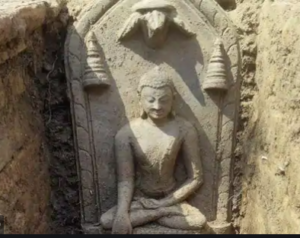
(rooms). In the west corner of the structure, we found five sculptures of Gautam Buddha
in seated position and one sculpture of Tara, which indicates that it might also be a
centre of Vajrayana,” said Dr Neeraj Mishra, assistant archaeologist at ASI.