 NORFOLK, ENGLAND— The Guardian reports that artifacts dating back to the Tudor
period were discovered during roof repairs at eastern England’s Oxburgh Hall, which was built in the late fifteenth century by the devout Catholic Bedingfeld family. In 1559, Sir Henry Bedingfeld refused to sign the Act of Uniformity, which outlawed the Catholic
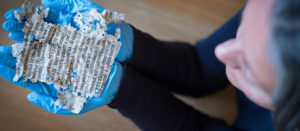
Mass. As a result, the Bedingfelds were persecuted and ostracized by the Tudor court. A complete personal prayer book with a gilded leather binding, found in an attic void by a builder, may have been concealed by the family. Among debris in a rat’s nest found
under floorboards in the northwest corner of the attic, archaeologist Matt Champion
recovered more than 200 well-preserved pieces of textiles such as silks, satin, leather,
velvet, wool, and embroidery dating to the late Tudor, Elizabethan, and early Georgian
periods, and scraps of handwritten music dated to the sixteenth century. Fragments of
pages from the hidden book were also found in the nest. Under the floorboards near the
attic’s south-facing windows, Champion found document fragments, evidence of wax
seals, and hundreds of pins, indicating that the well-lit area was used for sewing and
writing in the eighteenth century."