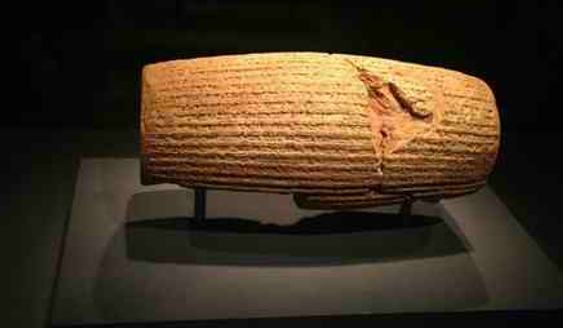
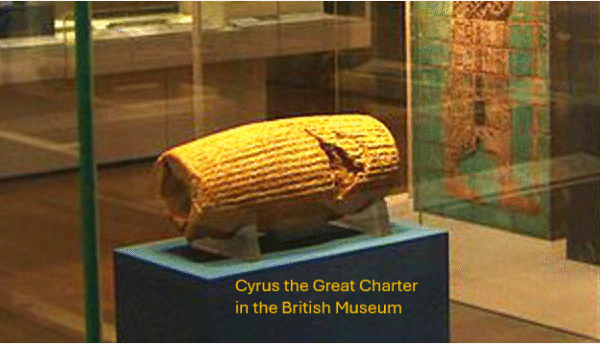
The Cyrus Cylinder, an ancient clay cylinder from 539 BC, contains decrees from Persian king Cyrus the Great that promoted religious freedom, equality, and the return of exiles. Its provisions are often seen as parallel to the first four articles of the Universal Declaration of Human Rights.
What it is: The Cyrus Cylinder is a baked-clay cylinder inscribed with a decree by Cyrus the Great, the first king of ancient Persia, after he conquered Babylon.
Content: It details Cyrus’s benevolent acts, including freeing slaves, declaring the right for all people to choose their own religion, and establishing racial equality.
Recognition: UNESCO officially recognized the Cyrus Cylinder as the world’s first written human rights charter in 2025.
Significance: Its provisions are considered to be a precursor to modern human rights concepts and have inspired later documents like the Universal Declaration of Human Rights.