We believe that all cultural, historical and natural heritage, wherever they are should be preserved. LEARN MORE
Archives

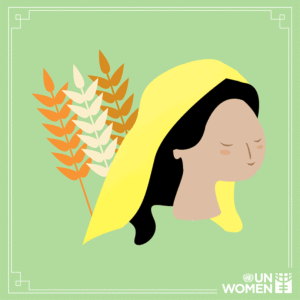
International Day of Rural Women

This year on International Day of Rural Women (15 October), we’re celebrating the vital
role that rural women play in climate action with a spotlight on “ Rural women and girls
building resilience ” theme.

As the world faces an increasingly critical need to address climate change, the important impact that rural women and girls have on building resilience is undeniable.

It will take not only leaders, but whole populations to make the changes for a carbon-
neutral world.

Rural women and girls are leaders in agriculture, food security and nutrition, land, managing natural resource management and unpaid and domestic care work. They are at the frontline when natural resources and agriculture are threatened. In fact, globally, one in three employed women works in agriculture . Women also collect biomass fuels, manually process food materials, and pump water; eighty percent of households without piped water rely on women and girls for water collection.

In Memoriam: Professor Shahmirzadi, an Iranian archaeologist and researcher

The Pasargad Heritage Foundation wishes to acknowledge the passing of Professor Sadegh Malek Shahmirzadi, an Iranian archaeologist and researcher, on October 13 in Tehran.
Professor Shahmirzadi completed his studies in archeology at the University of Tehran, and his master’s degree at the Institute of Oriental Studies at the University of Chicago. He then received his PhD in Anthropology from the University of Pennsylvania. In addition to his educational work, Shahmirzadi was also in charge of excavating many historical sites in Iran, including: Sagzabad, Zagheh, Poeinak Varamin, and Aq Tepe in Golestan Province.
One of Shahmirzadi’s most important efforts was the restoration “ Tape Sialk” – a large ancient archeological site- , which took five years.
In addition to university teaching, Professor Shahmirzadi was a prolific and active researcher and an author of many scientific and educational publications in archeology. He was the author of several books and articles in Farsi and English, including an archaeological textbook titled, “Prehistoric Iran: Archaeology of Iran from the Beginning to the Dawn of Urbanism.”

World Migratory Bird Day

World Migratory Bird Day (WMBD) is an awareness-raising campaign highlighting the
need for the conservation of migratory birds and their habitats. It aims to draw attention
to the threats faced by migratory birds, their ecological importance, and the need for
international cooperation to conserve them.
The Day is celebrated bi-annually on the second Saturday in May and in October.

Rock Art Discovered in Remote Cave in Thailand

BANGKOK, THAILAND reports that archaeologist Kanniga Premjai and her team of
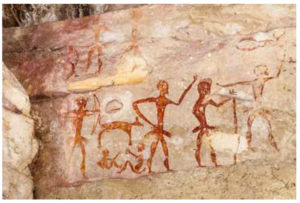
climbers have discovered rock art in one of the remote, unmapped caves in Sam Roi Yot National Park, which is located in the northern Malay Peninsula. Kanniga estimates the ochre drawings are between 2,000 and 3,000 years old. Noel Hidalgo Tan of Southeast Asia’s Regional Center for Archaeology and Fine Arts said the rock art was likely created by hunter-gatherers who had a camp in the mountains. Thailand’s oldest-known rock art, located further north, is between 5,000 and 11,000 years old, Kanniga added.

Ice Core Offers Insight Into 20th-Century Spanish Flu Pandemic

According to a statement released by Harvard University , Alexander More of Long Island University and the University of Maine and his colleagues compared climate data
collected from an ice core from a central European glacier with early twentieth-century historical records, and found that a six-year period of “miserable weather” preceded and overlapped with major battles of World War I and peaks in the numbers of deaths from the Spanish flu. “Basically, we saw a spike in cold, wet marine air from the northwest Atlantic that came down into Europe and lingered,” More said. Trench warfare in the cold, torrential rains and the resulting mud likely contributed to the run-down condition of soldiers’ health, in addition to malnutrition brought on by crop failures. The weather may have also disrupted the migratory patterns of disease-carrying waterfowl, More explained. The outbreak of the Spanish flu in the spring of 1918 is thought to have been connected to troop movements, infecting more than 500 million people and killing between 30 and 50 million.

Clamping down on women’s freedoms via Islamic Republic of Iran’s cultural heritage and tourism

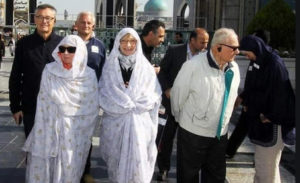
At a time when the cultural and historical heritage of Iran has fallen victim to negligence and destruction both intentional and unintentional, and while Iran’s tourism is at its worst, the General Directorate of Cultural Heritage and Tourism of Tehran has ordered violence against women without hijab (Islamic religious covering), following the directions of some of the religious ayatollahs.
This has been one of the ways in which the Islamic Republic has clamped down on human rights and freedoms and have attacked women once again.
According to Iranian local news agencies, Parham Janfeshan, the director general of cultural heritage and tourism in Tehran Province, has issued an order to travel agencies telling them that women must abide by Islamic behavior and the full hijab on all domestic and foreign trips.

Statement from the Pasargad Heritage Foundation Mehregan: a message of love and enlightenment

Statement from the Pasargad Heritage Foundation
Mehregan: a message of love and enlightenment
(10th – 16th Mehr – 1st – 7 h October)

Mehrgaan : Painting by Nestor Rakhshani

We are now on the eve of one of the largest celebrations in the world, the Mehregan celebration, which dates back thousands of years.
Mehregan is a nonreligious and apolitical celebration which to this day remains a symbol of beauty and new beginnings, as it carries a compassionate and cherished message.
Mehregan fosters a message of love and enlightenment, and for this reason it is known as “the Day of Love” in Iranian culture. It is also a day of commemoration for “fulfillment of the covenant,” because in our ancient culture, breaking the promise or pledge was considered deceitful and destructive as one of the worst sins.
Another important aspect of Mehregan, like other Iranian celebrations, is its secularity. During Mehregan, all people, regardless of gender, faith, religion, or race can be together, celebrating and sharing their joy.
Unfortunately for the last forty-two years, due to the dominance of an anti-Iranian culture and religious government, Iranians have not been able to hold and celebrate their national and non-religious celebrations easily, yet these festivities deserve to be celebrated in Iran.
This year, in particular because of challenges and problems from the pandemic and COVID-19, people have had more difficulty holding celebrations, even for Iranians abroad, therefore severely reducing and limiting the celebration of Mehregan and other annual events.
The Pasargad Heritage Foundation, like every year, asks the friends of Iranian culture to participate in the Mehregan celebration and to help preserve and spread its invaluable messages however possible.
This year our advice to lovers of Iranian culture, especially young people, is to use the internet and social media and to celebrate Mehregan with new initiatives and in a virtual way.
And let us not forget, in every Iranian celebration and ritual, to honor the memories of the martyrs and prisoners in Iran who have been fighting for freedom, so as to give more meaning and honor to our celebrations by remembering them and their names.
With kindness and joy,

Shokooh Mirzadegi
Pasargad Heritage Foundation
September 24, 2020
www.savepasargad.com

Wild birds as offerings to the Egyptian gods

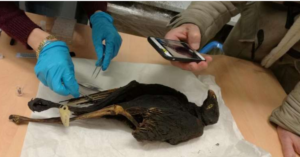
Millions of ibis and birds of prey mummies, sacrificed to the Egyptian gods Horus, Ra or Thoth, have been discovered in the necropolises of the Nile Valley. Such a quantity of mummified birds raises the question of their origin: Were they bred, like cats, or were they hunted? Scientists from the CNRS, the Université Claude Bernard Lyon 1 and the C2RMF have carried out extensive geochemical analyses on mummies from the Musée des Confluences, Lyon. According to their results, published on 22nd September 2020 in the journal Scientific Reports, they were wild birds.

Mammals, reptiles, birds: The tens of millions of animal mummies deposited as offerings in the necropolises of the Nile Valley bear witness to an intense religious fervor, and to the practices of collecting and preparing animals that undoubtedly contributed significantly to the economy from the Old Kingdom (3rd millennium BC) to Roman Egypt (1st-3rd centuries AD). However, the origin of these animals and the methods of supply remain unknown. For some tamed species, such as the cat, breeding was probably the most efficient way of supplying large numbers of animals for mummification. But unlike cats, bird mummies cover all stages of development, from egg to adult, which may indicate more opportunistic sourcing practices.

In order to determine the origin—breeding or hunting—of the mummified birds, tiny fragments of feathers, bones and embalming strips were taken from 20 ibis and birds of prey mummies from the collections of the Musée des Confluences, Lyon. If these birds, which migrate in the wild, had been bred, their diet would have been homogeneous, of local origin and reflected in the uniform isotopic composition of the animal remains, regardless as to whether that diet had been produced specifically or derived from that of coexisting humans.

The various tissues were therefore dated using the carbon-14 method and the isotopic compositions of oxygen, carbon, nitrogen, sulfur and strontium were measured, interpreted in terms of food sources and compared with those of contemporaneous human mummies. However, far from being homogeneous, these isotopic compositions showed a high variability and ‘exotic’ signatures compared to those of ancient Egyptian humans: the birds were wild, migrating seasonally out of the Nile Valley.

These results, combined with that of a genetic study carried out by another team, suggest the mass hunting and capture of birds as documented on certain tomb frescoes (for example, on the wall of Nakht’s tomb in the Theban Necropolis). Indeed, the Egyptians probably exerted a significant ecological pressure on wild bird populations long before the decline in avifauna observed today.

https://phys.org/news/2020-09-wild-birds-egyptian-gods.html
Oxford Museum Removes Controversial Shrunken Heads Display Which ‘Reinforced Racist Thinking’

The University of Oxford’s Pitt Rivers Museum has removed a collection of shrunken heads on display over concerns that they “reinforced racist and stereotypical thinking.”
On Monday, the acclaimed museum shared in a statement that visitors will see a number of “contentious displays” removed from its exhibits when its doors reopen to the public on Sept. 22.
The museum — which is one of the leading museums of anthropology, ethnography, and archaeology in the world — has removed 1230 human remains from its display as part of a museum-wide effort to “decolonize” the institution.
According to The Washington Post, decolonizing is described as “a process that institutions undergo to expand the perspectives they portray beyond those of the dominant cultural group, particularly white colonizers.”
RELATED: Spy Museum Plans to Change Torture Exhibit After Outcry from Lawmakers
Among the remains removed are the South American tsantas, also known as the “shrunken heads,” which were acquired by the museum between 1884 and 1936.
While the heads have been one of the museum’s most popular attractions since the 1940s, museum director Laura Van Broekhoven said that many visitors found the remains as “a testament to other cultures being ‘savage’, ‘primitive’ or ‘gruesome’.”
According to the museum, during the 19th and 20th centuries, the shrunken heads were collector’s items and were often traded by colonialists. These exchanges led “to a steep increase in violent warfare” at the time.
“Rather than enabling our visitors to reach a deeper understanding of each other’s ways of being, the displays reinforced racist and stereotypical thinking that goes against the Museum’s values today,” she continued. “The removal of the human remains also brings us in line with sector guidelines and code of ethics.”
The Shuar and Achuar communities — who created the tsantas — have long argued the removal of the heads from museums.
“We don’t want to be thought of as dead people to be exhibited in a museum, described in a book, or recorded on film… Our ancestors handed over these sacred objects without fully realizing the implications,” Shuar indigenous leaders, Miguel Puwáinchir and Felipe Tsenkush, explained in the statement.
RELATED: Auschwitz Museum Calls TikTok Trend of Teens Role-Playing as Holocaust Victims ‘Offensive’
The museum began an ethical review of its artifacts in 2017 in order to identify and prioritize displays that “required urgent attention because of the derogatory language used in the historic case labels or because they played into stereotypical thinking about cultures across the globe.”
Marenka Thompson-Odlum, a research associate who helped to curate the new displays, explained that removing the artifacts should not be considered a loss.
“What we are trying to show is that we aren’t losing anything but creating space for more expansive stories,” she said. “That is at the heart of decolonisation. We are allowing new avenues of story-telling and ways of being to be highlighted.”
According to the museum statement, Pitt Rivers still houses more than 2,800 human remains and is continuing to reach out to descendant communities to “find the most appropriate way to care for these complex items.”
When the museum reopens later this month, informational signs will be displayed in place of the artifacts to explain their removal.

International Day for the Preservation of the Ozone Layer

In 1994, the UN General Assembly proclaimed 16 September the International Day for the Preservation of the Ozone Layer, commemorating the date of the signing, in 1987, of the Montreal Protocol on Substances that Deplete the Ozone Layer (resolution 49/114).
The principal aim of the Montreal Protocol is to protect the ozone layer by taking measures to control total global production and consumption of substances that deplete it, with the ultimate objective of their elimination on the basis of developments in scientific knowledge and technological information.
The ozone layer, a fragile shield of gas, protects the Earth from the harmful portion of the rays of the sun, thus helping preserve life on the planet.
The phaseout of controlled uses of ozone depleting substances and the related reductions have not only helped protect the ozone layer for this and future generations, but have also contributed significantly to global efforts to address climate change; furthermore, it has protected human health and ecosystems by limiting the harmful ultraviolet radiation from reaching the Earth.