A world of 8 billion: Towards a resilient future for all – Harnessing opportunities and ensuring rights and choices for all
In 2011, the world reached a population of 7 billion. This year, the number will hit 8 billion, prompting the attendant responses. Some will marvel at the advancements in health that have extended lifespans, reduced maternal mortality and child mortality and given rise to vaccine development in record time. Others will tout technological innovations that have eased our lives and connected us more than ever. Still others will herald gains in gender equality.
But progress is not universal, throwing inequality into razor-sharp relief. The same concerns and challenges raised 11 years ago remain or have worsened: Climate change, violence, discrimination. The world reached a particularly grim milestone in May: More than 100 million forcibly displaced worldwide.
In an ideal world, 8 billion people means 8 billion opportunities for healthier societies empowered by rights and choices. But the playing field is not and has never been even. Based on gender, ethnicity, class, religion, sexual orientation, disability and origin, among other factors, too many are still exposed to discrimination, harassment and violence. We do ourselves no favors when neglecting those left behind.
Let no alarmist headline distract from the work at hand: investing in human and physical capital for inclusive, productive societies that uphold human and reproductive rights. Only then can we tackle the enormous challenges facing our planet and forge a world where health, dignity and education are rights and realities, not privileges and empty promises. In a world of 8 billion, there must always be space for possibility.
UN Secretary-General António Guterres
Background
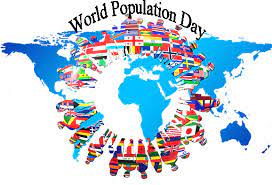
World Population Day, which seeks to focus attention on the urgency and importance of population issues, was established by the then-Governing Council of the United Nations Development Programme in 1989, an outgrowth of the interest generated by the Day of Five Billion, which was observed on 11 July 1987.
By resolution 45/216 of December 1990, the United Nations General Assembly decided to continue observing World Population Day to enhance awareness of population issues, including their relations to the environment and development.
The Day was first marked on 11 July 1990 in more than 90 countries. Since then, a number of a number of UNFPA country offices and other organizations and institutions commemorate World Population Day, in partnership with governments and civil society.