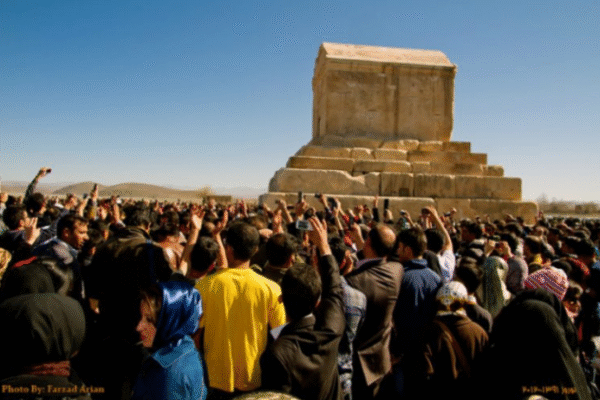
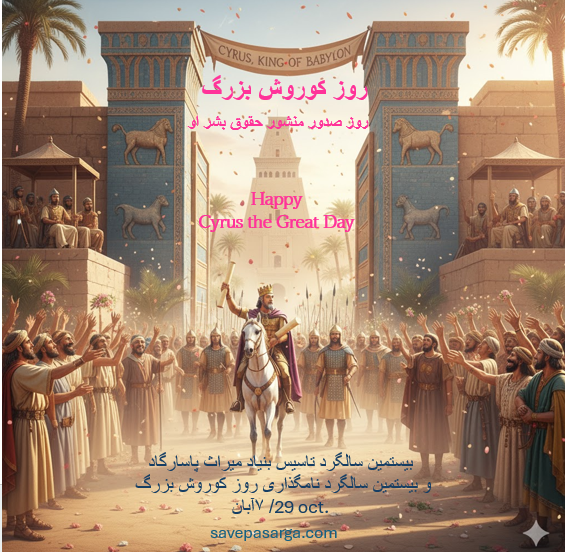
In 2005, the International Committee for the Preservation of Pasargad designated October 29 as “Cyrus the Great Day.” This date commemorates the issuance of his charter and was chosen to highlight the historical significance of Cyrus the Great. The committee’s aim was to raise awareness and support for preventing the flooding of the Sivand Dam, which threatened the tomb of Cyrus the Great with dampness and destruction. Fortunately, this initiative was well-received by both the media and the public, both within Iran and internationally.
The Preservation Committee, operating as the “Pasargad Heritage Foundation,” was officially established in the United States in 2007. It was founded as the first international Non-Governmental Organization (NGO) dedicated to preserving Iranian cultural heritage. Through the support of cultural supporters worldwide and timely intervention from UNESCO, the foundation successfully compelled the Ahmadinejad government (the government of Iran at the time) to lower the height of the Sivand Dam, mitigating the risk of damage from dampness to the Pasargad site’s monuments.
Naming Cyrus the Great Day not only prevented the danger that threatened Pasargadae, but also raised awareness of Cyrus’s significant contributions to the survival of human civilization.
The importance of this designation lies in its approval by a non-governmental cultural organization and dozens of prominent cultural and social figures. This was achieved without any governmental or religious support, and it has been widely recognized by Iran-friendly visual and audio media abroad, as well as thousands of Iranian and non-Iranian individuals both within and outside of Iran.
For years now, coinciding with Cyrus the Great Day on October 29th, many people in Iran and abroad have honored the name and memory of a man who, 25 centuries before the Universal Declaration of Human Rights was written and at a time when the world was consumed by violence and backwardness, stated in his charter: “He entered Babylon in peace, his many soldiers walked in Babylon in friendship, and he did not let anyone be intimidated in all the lands of Sumer and Akkad. He rescued the oppressed people from helplessness, returned the displaced to their homes, freed the slaves from slavery, and commanded that everyone be free to choose their religion and place of residence…”
Pasargad Heritage Foundation