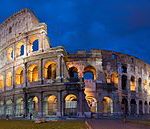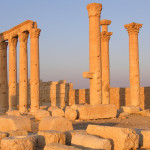

We believe that all cultural, historical and natural heritage, wherever they are should be preserved. LEARN MORE
Education

World Youth Skills Day

Reimagining Youth Skills Post-Pandemic

World Youth Skills Day 2021 will again take place in a challenging context due to the ongoing COVID-19 pandemic.

UNESCO estimates that schools were either fully or partially closed for more than 30 weeks between March 2020 and May 2021 in half the countries of the world. In late June, 19 countries still had full school closures, affecting nearly 157 million learners. And 768 million more learners were affected by partial school closures.

Respondents to a survey of technical and vocational education and training (TVET) institutions jointly collected by UNESCO, the International Labour Organization (ILO) and the World Bank reported that distance training had become the most common way of imparting skills, with considerable difficulties regarding, among others, curricula adaptation, trainee and trainer preparedness, connectivity, or assessment and certification processes.

ILO estimates show that globally, youth employment fell 8.7 per cent in 2020, compared with 3.7 per cent for adults, with the most pronounced fall seen in middle-income countries. The consequences of this disruption to the early labour market experiences of youth could last for years.

World Youth Skills Day 2021 will pay tribute to the resilience and creativity of youth through the crisis. Participants will take stock of how TVET systems have adapted to the pandemic and recession, think of how those systems can participate in the recovery, and imagine priorities they should adopt for the post-COVID-19-world.

Why is World Youth Skills Day important?

In 2014, the United Nations General Assembly declared 15 July as World Youth Skills Day, to celebrate the strategic importance of equipping young people with skills for employment, decent work and entrepreneurship. Since then, World Youth Skills Day events have provided a unique opportunity for dialogue between young people, technical and vocational education and training (TVET) institutions, firms, employers’ and workers’ organizations, policy makers and development partners. Participants have highlighted the ever-increasing significance of skills as the world is embarking on a transition towards a sustainable model of development.
 

World Refugee Day

What is World Refugee Day?

World Refugee Day is an international day designated by the United Nations to honour refugees around the globe. It falls each year on June 20 and celebrates the strength and courage of people who have been forced to flee their home country to escape conflict or persecution. World Refugee Day is an occasion to build empathy and understanding for their plight and to recognize their resilience in rebuilding their lives.

Why is World Refugee Day important?

World Refugee Day shines a light on the rights, needs and dreams of refugees, helping to mobilize political will and resources so refugees can not only survive but also thrive. While it is important to protect and improve the lives of refugees every single day, international days like World Refugee Day help to focus global attention on the plight of those fleeing conflict or persecution. Many activities held on World Refugee Day create opportunities to support refugees.

When is World Refugee Day? When did World Refugee Day start?

World Refugee Day falls each year on June 20 and is dedicated to refugees around the globe. World Refugee Day was held globally for the first time on June 20, 2001, commemorating the 50th anniversary of the 1951 Convention relating to the Status of Refugees. It was originally known as Africa Refugee Day, before the United Nations General Assembly officially designated it as an international day in December 2000.

What happens on World Refugee Day?

Each year, World Refugee Day is marked by a variety of events in many countries around the globe in support of refugees. These activities are led by or involve refugees themselves, government officials, host communities, companies, celebrities, school children and the general public, among others. 

World Day for Cultural Diversity for Dialogue and Development 21 May

Impact of COVID-19 on the Cultural Sector

Cultural events cancelled, cultural institutions closed, community cultural practices suspended, empty UNESCO World Heritage sites, heightened risk of looting of cultural sites and poaching at natural sites, artists unable to make ends meet and the cultural tourism sector greatly affected… The impact of COVID-19 on the cultural sector is being felt around the world. This impact is social, economic and political – it affects the fundamental right of access to culture, the social rights of artists and creative professionals, and the protection of a diversity of cultural expressions.

The unfolding crisis risks deepening inequalities and rendering communities vulnerable. In addition, the creative and cultural industries (CCI) contribute US$2,250bn to the global economy (3% of GDP) and account for 29.5 million jobs worldwide. The economic fall-out of not addressing the cultural sector – and all auxiliary services, particularly in the tourism sector – could also be disastrous.

Protecting the diversity of cultural expressions is more important than ever

The COVID-19 pandemic has revealed and magnified the creative industries’ pre-existing volatility. Due to the complex nature of their work, cultural professionals are particularly affected and lockdown measures around the world directly impact the entire creative value chain.

UNESCO has launched a page that aims to serve as a reference for those seeking to draw inspiration from best practices in the development of appropriate responses adapted to national contexts. UNESCO has also launched a weekly “Culture & COVID-19: Impact and Response Tracker” to provide an overview of the rapidly evolving situation.

World Creativity and Innovation Day 21 April

Celebrating the creative economy in 2021

After a year of pandemic-induced lockdowns, there couldn’t be a better time to appreciate the creative economy. The United Nations is doing just this as it marks 2021 as the International Year of the Creative Economy for Sustainable Development . UNCTAD , alongside UNESCO , WIPO , UNIDO , the WTO will drive the annual celebrations and observations of the year.

UNCTAD Acting Secretary-General Isabelle Durant said the resolution was timely. “The creative industries are critical to the sustainable development agenda . They stimulate innovation and diversification, are an important factor in the burgeoning services sector, support entrepreneurship, and contribute to cultural diversity,” she said.

Creativity and innovation in problem-solving

There may be no universal understanding of creativity. The concept is open to interpretation from artistic expression to problem-solving in the context of economic, social and sustainable development. Therefore, the United Nations designated 21 April as World Creativity and Innovation Day to raise the awareness of the role of creativity and innovation in all aspects of human development.

Wealth of Nations

Creativity and innovation, at both the individual and group levels, have become the true wealth of nations in the 21st century, according to the findings of the special edition of the Creative Economy Report ” Widening local development pathways “, co-published by the United Nations Educational, Scientific and Cultural Organization (UNESCO) and the UN Development Programme (UNDP) through the UN Office for South-South Cooperation (UNOSSC).

Creativity and Culture

Cultural and creative industries should be part of economic growth strategies, according to the UNESCO report on culture and sustainable development . These industries are among the most dynamic sectors in the world economy, generating $2.25 billion in revenue and 29.5 million jobs worldwide. In that spirit, countries are harnessing the potential of high-growth areas of the market for economic returns and poverty
alleviation.

International Day of Human Space Flight 12 April

Background

On 4 October 1957 the first human-made Earth satellite Sputnik I was launched into outer space, thus opening the way for space exploration. On 12 April 1961, Yuri Gagarin became the first human to orbit the Earth, opening a new chapter of human endeavour in outer space.
The Declaration further recalls “the amazing history of human presence in outer space and the remarkable achievements since the first human spaceflight, in particular Valentina Tereshkova becoming the first woman to orbit the Earth on 16 June 1963, Neil Armstrong becoming the first human to set foot upon the surface of the Moon on 20 July 1969, and the docking of the Apollo and Soyuz spacecrafts on 17 July 1975, being the first international human mission in space, and recall that for the past decade humanity has maintained a multinational permanent human presence in outer space aboard the International Space Station.”

UN and Space
From the very beginning of the Space Age, the United Nations recognized that outer space added a new dimension to humanity’s existence. The United Nations family strives continuously to utilize the unique benefits of outer space for the betterment of all humankind.
Recognizing the common interest of humankind in outer space and seeking to answer
questions on how outer space can help benefit the people’s of Earth, the General
Asssembly adopted its first resolution related to outer space, resolution 1348 (XIII) entitled “Question of the Peaceful Use of Outer Space”.
On 10 October 1967, the “Magna Carta of Space”, also known as the Treaty on Principles Governing the Activities of States in the Exploration and Use of Outer Space, including the Moon and Other Celestial Bodies entered into force.
Today, the United Nations Office for Outer Space Affairs (UNOOSA) is the United Nations office responsible for promoting international cooperation in the peaceful uses of outer space. UNOOSA serves as the secretariat for the General Assembly’s only committee dealing exclusively with international cooperation in the peaceful uses of outer space:
The United Nations Committee on the Peaceful Uses of Outer Space(COPUOS).
UNOOSA is also responsible for implementing the Secretary-General’s responsibilities
under international space law and maintaining the United Nations Register of Objects
Launched into Outer Space.