
We believe that all cultural, historical and natural heritage, wherever they are should be preserved. LEARN MORE
News

Default Category

92 Museum Leaders Release Statement Addressing Climate Actions That Target Works of Art

Following weeks of increasingly frequent actions by climate activists targeting works of art in museums around the world, the National Committee in Germany of ICOM, the International Council of Museums, has issued a statement to address the vandalism.

The letter has been cosigned by 92 representatives from cultural institutions, including Laurence des Cars of the Louvre; Miguel Falomir, director of the Prado; Hartwig Fischer, director of the British Museum; Richard Armstrong, director of the Guggenheim; and Martine Gosselink, general director of the Mauritshuis.

Rather than tackling the question of whether the actions—throwing foodstuffs at paintings or gluing body parts to frames—are effective at pressing government officials to enact real climate policy, the statement mainly addresses the potential damage to artworks.

The activists, the letter reads, “severely underestimate the fragility of these irreplaceable objects, which must be preserved as part of our world cultural heritage.” The signatories continue, “As museum directors entrusted with the care of these works, we have been deeply shaken by their risky endangerment.” Nonetheless, the statement ends by emphasizing museums as sites for “social discourse.”

In response to these demonstrations, museums have been beefing up security measures. Berlin venues and the Museum Barberini in Potsdam are now requiring visitors store jackets and bags in lockers. Since news of the actions is often spread via social media, Beate Reifenscheid, chair of ICOM in Germany, told Artnet News that soon, cellphones and cameras may be confiscated as well. Last month, museum guards at the Musée d’Orsay were able to thwart an attack when they noted a woman in a “Just Stop Oil” shirt entering the institution. Protesters have also been fined and sentenced to jail time, though it’s not stopping further actions.

The protests and ICOM’s letter come as more than 90 heads of state and representatives from 190 countries meet in Egypt for COP27, the 2022 United Nations Climate Change Conference, to address pressing issues of global climate change.
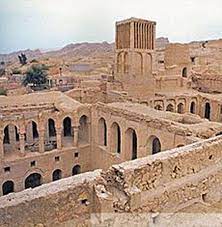

Continued Destruction of Iran’s National Treasures

Recently national heritage experts in Iran have been speaking out about the condition of archeological artifacts and sites in Iran. According to Mohammad Ismail Esmaili, the head of the Scientific Association of Archeology of Iran, for several years the findings of Bandar Sassanid in the Persian Gulf and the ancient works of Siraf, which have been stored among the treasures of the National Museum, have been left without examination and further studies. According to him, many in the research community are not even aware of their existence.

Esmaili who was the head of the excavation of the ancient port of Siraf, told ISNA news agency that; “The archeological excavations of Siraf before the Islamic Revolution of Iran were jointly carried out by Iranian and British archaeologists, and the artifacts and objects obtained from it were then transferred to the two main museums, the British Museum and the National Museum of Iran. However, after the Iranian revolution while excavations were carried out in the area and many objects were transferred to the Iran National Museum, they have not been studied or investigated in these years. As a result many artifacts have been abandoned”.

According to many archaeologists, the poor handling of heritage site and objects and lack of awareness of some officials and residents of Siraf region, (many of whom are non-natives and are present in the region for work), about the importance of Siraf, has created the grounds for continued destruction of the heritage site which has great importance for Iran and global archeology community.

It seems that the archeology experts who have not been allowed to talk about Iran’s cultural-historical heritage in recent years, are now raising issues that the people of Iran were unaware of until recently.

World Science Day for Peace and Development, 10 November

Celebrated every 10 November, World Science Day for Peace and Development highlights the significant role of science in society and the need to engage the wider public in debates on emerging scientific issues. It also underlines the importance and relevance of science in our daily lives.

By linking science more closely with society, World Science Day for Peace and Development aims to ensure that citizens are kept informed of developments in science. It also underscores the role scientists play in broadening our understanding of the remarkable, fragile planet we call home and in making our societies more sustainable.

The Day offers the opportunity to mobilize all actors around the topic of science for peace and development – from government officials to the media to school pupils. UNESCO strongly encourages all to join in celebrating World Science Day for Peace and Development by organizing your own event or activity on the day.

Thor’s Hammer Amulet Found in Sweden

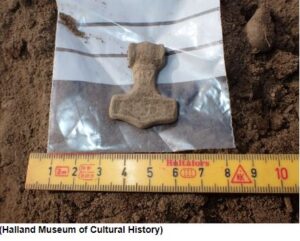
YSBY, SWEDEN—Ahead of construction of a housing development at a site in southwestern Sweden, archaeologists unearthed a metal amulet in the shape of Mjölnir, the Norse god Thor’s hammer, Live Science reports. Dating to the period between the ninth and eleventh centuries A.D., the amulet is the first of its kind to be found in this region. It is decorated with embossed designs, and may have originally been covered in gold or silver. A hole through the hammer’s handle would have enabled the amulet to be strung and worn as jewelry. Acoording to archaeologist Per Wranning of the Halland Museum of Cultural History, people might have worn objects like this to signal their religious leanings at the end of the Viking Age, when Christianity began to supplant worship of the old Norse gods in Scandinavia. Researchers have also excavated firepits, postholes, pottery, and other metal items at the site. 

Nazanin Boniadi speaks at the UN Security Council, Arria-Formula Meeting on Iran.

Shokooh Mirzadegi

9:45 AM (6 hours ago)
to me


Translate message

Turn off for: English

Hi mikael jaan this note and video is for today or when you have time

Nazanin Boniadi speaks at the UN Security Council, Arria-Formula Meeting on Iran.

https://www.youtube.com/watch?v=lmNfjy-8oyM&ab_channel=NazaninBoniadi

The speech of artist and human rights activist Nazanin Boniadi in the United Nations Council in connection with the nationwide protests in Iran and the violent suppression by the Islamic government in Iran.

On November 2nd, 2022, the United States and Albania organized and co-hosted a UN Security Council Arria formula meeting to highlight the ongoing repression of women and girls and members of religious and ethnic minority groups in Iran and highlighting the ongoing unlawful use of force against peaceful protesters. The protests which started in September 2022, after the killing of a twenty year old woman, Mahsa Amini  by the elements of Iranian government have seen thousands arrested and hundreds killed by the Islamic government.  The meeting also sought to identify opportunities to promote credible, international, independent investigations into the Iranian government’s human rights violations and abuses.

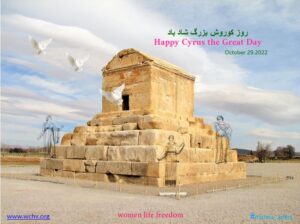
Cyrus the Great Day – 2022

The “Day of Cyrus the Great” Coincides with Call for Freedom in Iran

We are standing on the threshold of the “Day of Cyrus the Great”, and this year coincides with one of the most amazing uprisings for freedom in the world by the country women and men of Cyrus the Great. An uprising by women as the standard-bearers, and the youth as its brave soldiers. Soldiers who, like their historical fathers and leaders, intend to end the dark era of suffering and discrimination they have experienced in the hands of a brutal and oppressive government, and give peace, happiness and prosperity to the people of their land.

We at the Pasargad Heritage Foundation, as admirers of Cyrus the Great, as we have said many times, say that for us (as for many) Cyrus was neither a saint, nor an angel, nor the first ancient emperor. Cyrus’ importance as a historical figure is not because his name appears in holy books like the Bible, Torah and Quran. Cyrus is praiseworthy for his contributions and his decrees on human rights and freedom. He gave as binding laws for human rights not only for the people of his homeland, but also the people of other lands and the people with different religion and believes.

One of the most important and beautiful parts of the Cyrus’ Charter, especially these days when the children of Iran are being killed by the soldiers of the criminal leaders of Islamic government, is where it says:

“My very friendly soldiers were marching inside Babylon, I did not let anyone (anywhere) be intimidating in all the lands of Sumer and Akkad.”

The words of a powerful and mindful leader whose government was not based on fear, but based on wisdom and love.

Considering the historical facts, we cannot be indifferent to Cyrus the Great as a person of universal value, regardless of our belief and creed, religion or non-religion. We cannot be Iranian and not respect him. We cannot accept human rights but ignore his charter.

Pasargad Heritage Foundation, as the organization that proposed the designation of “Great Cyrus Day”, with respect for freedom fighters and especially the wise and brave women of Iran, calls on the people of the world to remember and support the nationwide uprising of the people of our land. As Cyrus the Great’s entry into Babylon was the day of saving the people from the hands of the oppressors, may this Cyrus’ day be the day of driving out the oppressors and opening the doors of freedom, happiness and peace for the people of Iran.

Happy Cyrus day

Sincerely

Shokooh Mirzadegi

Spokesperson of “Pasargad Heritage Foundation”

October 2022

www.savepasargad.com

Women’s Rights are Human Rights: Woman, Life, and Freedom

by Sahar Panahi.

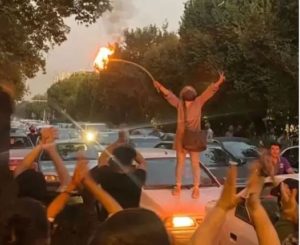
The protests in Iran over the last four weeks after the arrest and killing of a 22 year old young Kurdish Iranian woman, Mahsa Amini, by elements of Iranian government, who are called the “morality police”, show no signs of ending. In fact, the small demonstrations that started almost a month ago have now grown and spread to hundreds and thousands of people and to every city in Iran resembling a new Iranian uprising. The protests have also grown in major cities across the world including in London, Paris, Frankfurt and Stockholm, in support of the protests in Iran. The demonstrators in Iran are calling out the Iran’s Islamic Government which has been in power over the last four decades for its atrocities and oppression of the Iranian public and its practices which include imprisonment, torture and rape of the Iranian women and men.

Amnesty International states that women’s rights are human rights. These simply include the right to live free from violence and discrimination; to enjoy the highest attainable standard of physical and mental health; to be educated; to own property; to vote; and to earn an equal wage. However, we know that across the globe many women and girls still face discrimination on the basis of sex and gender. Gender inequality underpins many problems which disproportionately affect women and girls, such as domestic and sexual violence, lower pay, lack of access to education, and inadequate healthcare. For Iranian women these conditions have worsened every year since the Islamic government came to power in Iran. Iranian women who could choose to dress as they wished and attain high educational degrees before the Islamic revolution in 1979 have been forced to take a back sit to their brothers and sons. The morality police can indiscriminately stop women on the street for just wearing a lipstick and punish them as they wish. This happened to Mahsa Amini. Under the Islamic regime standards of living have greatly fallen for the middle class, hard working Iranians and most people cannot afford even food and basics in their everyday lives. Women are disproportionately affected by social and economic pressures.

The women and Men on the streets of Iran are shouting: “Woman, Life, Freedom”, while asking for complete change in the government of Iran and removal of a political regime which has brought nothing except misery and oppression to Iranians over the last forty years with inflations rates of over 50% at times and sanctions due to policies of its government. This has been a government which on one hand kills its own people including tens of children and young people over the last month and on the other sends drones to Russia to kill Ukrainians in the unjust war of aggression of Russia and illegal occupation of Ukraine. Iran’s morality police, Basigis and Pasdaran (two military and security elements of the regime) who are killing the demonstrators on the streets of Iran with live ammunitions are part of the Iranian Islamic government. It is absolutely meaningless for Western governments to sanction these groups while they receive their orders from the leaders of the Islamic government.

Perhaps, it’s time for the international community, and especially, the European Union, the United Kingdom and the United of States of America to start looking at the facts and suffering of Iranian people and start supporting freedom, life and women’s rights in Iran.

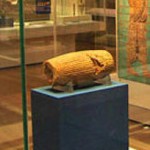
Women’s rights are the fundamental human rights that were enshrined by the United Nations for every human being on the planet nearly 70 years ago. Over 2500 years ago, Cyrus the great, the first great king of Persia announced the first declaration of human rights. Cyrus ordered slaves to be freed, declared that all people had the right to choose their own religion, and established racial equality. Cyrus’ decrees were recorded on a baked-clay cylinder in the Akkadian language with cuneiform script, which today is called the Cyrus’ Cylinder. In fact, this ancient record has now been recognized as the world’s first charter of human rights and its provisions are recognized to be similar to the first four Articles of the Universal Declaration of Human Rights. Today, Iranian women are not just asking for their own rights. They are also asking for the rights of every Iranian citizen to live under a government that cares for Iran and Iranian people. Iranian people are asking for freedom and life without the Islamic government.

International Day of Awareness on Food Loss and Waste Reduction

Stop Food Loss and waste, for the people, for the planet

Reducing food losses and waste is essential in a world where the number of people affected by hunger has been slowly on the rise since 2014, and tons and tons of edible food are lost and/or wasted every day.

Globally, around 14 percent of food produced is lost between harvest and retail, while an estimated 17 percent of total global food production is wasted (11 percent in households, 5 percent in the food service and 2 percent in retail).

The International Day of Awareness of Food Loss and Waste is an opportunity to call to action both the public (national or local authorities) and the private sector (businesses and individuals), to prioritise actions and move ahead with innovation to reduce food loss and waste towards restoring and building back better and resilient-ready, food systems.

Check how you can help us through FAO, the leading agency for this International Day, and discover what you can do. Take action, start something. Stop food loss and waste. For the people. For the planet.

HISTORY

Food loss has been around since the beginning of time as things like spoilage couldn’t be well controlled then. Now we have the means to control a large part of spoilage but are still having food loss and wastage due to many reasons, from negligence to lack of the technical know-how, lots of things contribute to food loss and wastage.

Around 14% of food produced in the World is lost between harvest and retail, while an estimated 17% of total global food production is wasted, which comprises 11% in households, 5% in the food service, and 2% in retail. This amounts to global losses in agriculture of about 1.2 billion tonnes per year causing monetary losses in the field worth more than 350 million dollars annually. Saving just one-fourth of the food currently lost or wasted in the World could help feed 870 million people who are living in hunger as well as fight climate change as food loss and waste is responsible for about 8% of global greenhouse gas (G.H.G.) emissions, leading to a depletion of the ozone layer and causing climate change.

Food loss and waste greatly undermine the sustainability of our food systems as when food is lost or wasted, all resources used to produce it — including water, land, energy, labor, and capital go to waste. It also negatively impacts food security and food availability and contributes to increasing the cost of food. With all these, The Food and Agriculture Organization of the United Nations (F.A.O.) was established in 1945 to defeat hunger in the World and they have made several strides towards achieving this, including meeting up in December 2019 to collectively establish a day for the International Day of Awareness of Food Loss and Waste, of which September 29 was chosen.

Gold Mask Found in Shang Dynasty Tomb in Central China

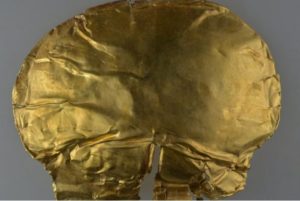
ZHENGZHOU, CHINA—A 3,000-year-old gold funeral mask has been recovered from a Shang Dynasty noble’s tomb in central China, according to a Live Science report. Huang Fucheng of the Zhengzhou Municipal Institute of Cultural Heritage and Archaeology said the mask measures about seven inches long and almost six inches wide, making it big enough to have covered an adult’s face. More than 200 artifacts, including ornate daggers, axes, wine vessels, smoking pipes, and goblets made of bronze and jade were also recovered from the tomb, which covers more than 108,000 square feet. Gold objects are rare at Shang Dynasty sites, and may indicate a link to another early Chinese state where gold was more common. “Where does the raw gold come from?” asked Chen Lüsheng of the National Museum of China. “Why did the tomb occupant choose to be buried with gold, while other top elites chose only bronzes and jades?” Gold has been found in small amounts in the region, he added, but it may have been imported as an exotic metal from the Yangtze River Valley to the south.