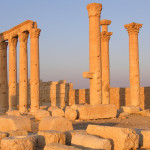
 BRISBANE, AUSTRALIA—Nature News reports that hundreds of human and animal bones and more than 40 fragments of stone tools have been uncovered at the entrance to a lava tube cave in northwestern Saudi Arabia. The stone tools are thought to be as much as 10,000 years old,
 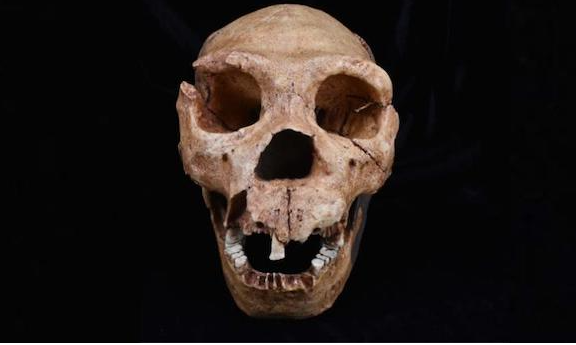 while the oldest human bone fragment has been dated to about 7,000 years ago. Zooarchaeologist Mathew Stewart of Griffith University and his colleagues said that the distribution of the artifacts indicates that the cave was occupied intermittently, for short periods. Nearby rock art depicting people with goats and sheep suggests that herders may have come to the cave for rest and shelter while traveling from oasis to oasis across the basalt plain of Harrat Khaybar, as they still do today. These routes have probably been used for thousands of years, explained Melissa Kennedy of the University of Sydney, since 4,500-year-old tombs have been found in the region. “People are very lazy,” she said. “You find the easiest route and you stick to it.” Read the original scholarly article about this research in PLOS ONE.
News
When Mother Earth sends us a message
 Mother Earth is clearly urging a call to action. Nature is suffering. Oceans filling with plastic and turning more acidic. Extreme heat, wildfires and floods, have affected millions of people.
Climate change, man-made changes to nature as well as crimes that disrupt biodiversity, such as deforestation, land-use change, intensified agriculture and livestock production or the growing illegal wildlife trade, can accelerate the speed of destruction of the planet.
This is the third Mother Earth Day celebrated within the UN Decade on Ecosystem Restoration. Ecosystems support all life on Earth. The healthier our ecosystems are, the healthier the planet – and its people. Restoring our damaged ecosystems will help to end poverty, combat climate change and prevent mass extinction. But we will only succeed if everyone plays a part.
UNESCO: Takht-e Soleiman
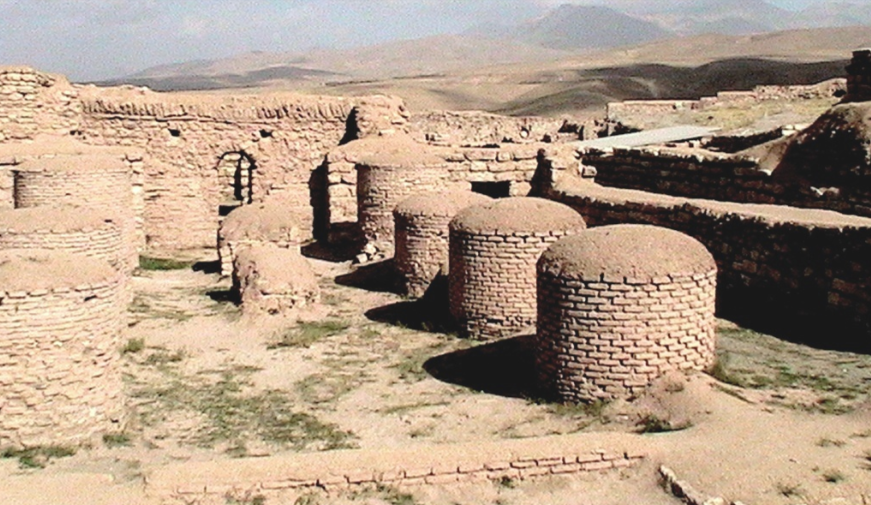
UNESCO: Takht-e Soleiman
The article below on Takht-e Soleyman (or Takht-e Suleiman) is by UNESCO. Kindly note that except one photo, all other images and accompanying captions do not appear in the UNESCO posting.
==========================================================================
The archaeological site of Takht-e Soleyman, in north-western Iran, is situated in a valley set in a volcanic mountain region. The site includes the principal Zoroastrian sanctuary partly rebuilt in the Ilkhanid (Mongol) period (13th century) as well as a temple of the Sasanian period (6th and 7th centuries) dedicated to Anahita.
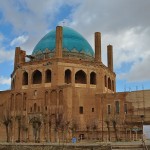
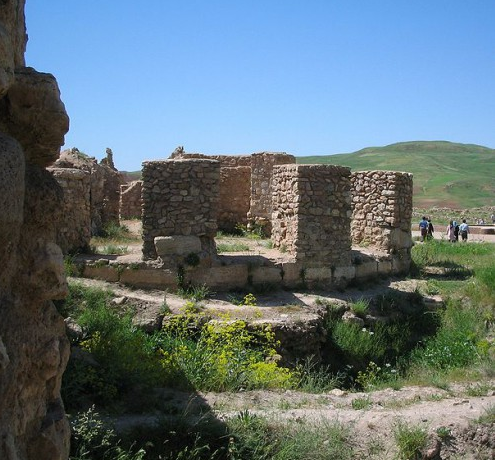 One of the structures at Takhte Suleiman (Picture Source: World Historia).
The site has important symbolic significance. The designs of the fire temple, the palace and the general layout have strongly influenced the development of Islamic architecture.
Brief Synthesis
The archaeological ensemble called Takht-e Soleyman (“Throne of Solomon”) is situated on a remote plain surrounded by mountains in northwestern Iran’s West Azerbaijan province. The site has strong symbolic and spiritual significance related to fire and water – the principal reason for its occupation from ancient times – and stands as an exceptional testimony of the continuation of a cult related to fire and water over a period of some 2,500 years. Located here, in a harmonious composition inspired by its natural setting, are the remains of an exceptional ensemble of royal architecture of Persia’s Sasanian dynasty (3rd to 7th centuries). Integrated with the palatial architecture is an outstanding example of Zoroastrian sanctuary; this composition at Takht-e Soleyman can be considered an important prototype.
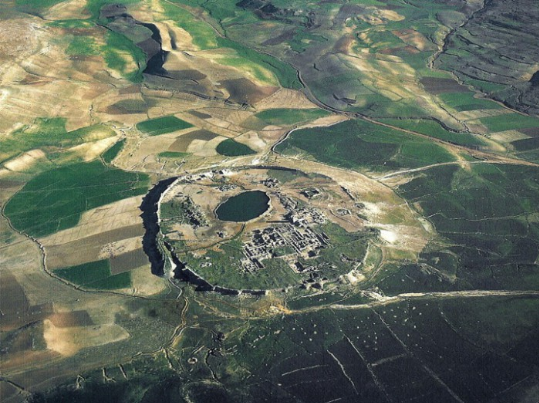 An excellent overview of the site of the site of Ādur-Gushnasp or Shiz (modern-day Takhte Suleiman) (Picture Source: Iran Atlas). The Ādur-Gushnasp sacred fire was dedicated to the Arteshtaran (Elite warriors) of the Sassanian Spah (Modern Persian: Sepah = Army).
An artesian lake and a volcano are essential elements of Takht-e Soleyman. At the site’s heart is a fortified oval platform rising about 60 metres above the surrounding plain and measuring about 350 m by 550 m. On this platform are an artesian lake, a Zoroastrian fire temple, a temple dedicated to Anahita (the divinity of the waters), and a Sasanian royal sanctuary. This site was destroyed at the end of the Sasanian era, but was revived and partly rebuilt in the 13th century. About three kilometres west is an ancient volcano, Zendan-e Soleyman, which rises about 100 m above its surroundings. At its summit are the remains of shrines and temples dating from the first millennium BC.
Takht-e Soleyman was the principal sanctuary and foremost site of Zoroastrianism, the Sasanian state religion. This early monotheistic faith has had an important influence on Islam and Christianity; likewise, the designs of the fire temple and the royal palace, and the site’s general layout, had a strong influence on the development of religious architecture in the Islamic period, and became a major architectural reference for other cultures in both the East and the West. The site also has many important symbolic relationships, being associated with beliefs much older than Zoroastrianism as well as with significant biblical figures and legends.
The 10-ha property also includes Tepe Majid, an archaeological mound culturally related to Zendan-e Soleyman; the mountain to the east of Takht-e Soleyman that served as quarry for the site; and Belqeis Mountain 7.5 km to the northeast, on which are the remains of a Sasanian-era citadel. The archaeological heritage of the Takht-e Soleyman ensemble is further enriched by the Sasanian town (which has not yet been excavated) located in the 7,438-ha landscape buffer zones.
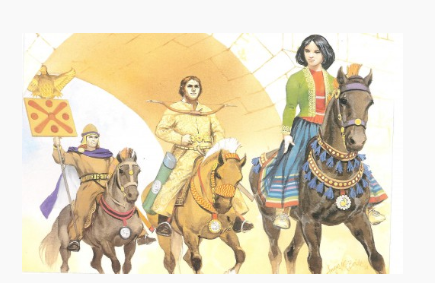 A reconstruction of the late Sassanians at Ādur Gušnasp or Shiz (Takht e Suleiman in Azarbaijan, northwest Iran) by Kaveh Farrokh (painting by the late Angus Mcbride) in Elite Sassanian Cavalry-اسواران ساسانی–. To the left rides a chief Mobed (a top-ranking Zoroastrain priest or Magus), General Shahrbaraz (lit. “Boar of the realm”) is situated in the center and Queen Boran (Poorandokht) leads to the right.
Criterion (i):Takht-e Soleyman is an outstanding ensemble of royal architecture, joining the principal architectural elements created by the Sassanians in a harmonious composition inspired by their natural context.
Criterion (ii):The composition and the architectural elements created by the Sassanians at Takht-e Soleyman have had strong influence not only in the development of religious architecture in the Islamic period, but also in other cultures.
Criterion (iii):The ensemble of Takht-e Soleyman is an exceptional testimony of the continuation of cult related to fire and water over a period of some two and half millennia. The archaeological heritage of the site is further enriched by the Sassanian town, which is still to be excavated.
Criterion (iv):Takht-e Soleyman represents an outstanding example of Zoroastrian sanctuary, integrated with Sasanian palatial architecture within a composition, which can be seen as a prototype.
Criterion (vi): As the principal Zoroastrian sanctuary, Takht-e Soleyman is the foremost site associated with one of the early monotheistic religions of the world. The site has many important symbolic relationships, being also a testimony of the association of the ancient beliefs, much earlier than the Zoroastrianism, as well as in its association with significant biblical figures and legends.
Integrity
Within the boundaries of the property are located the known elements and components necessary to express the Outstanding Universal Value of the property, including the lake and the volcano, archaeological remains related to the Zoroastrian sanctuary, and archaeological remains related to the royal architecture of the Sassanian dynasty. Masonry rooftops have collapsed in some areas, but the configurations and functions of the buildings remain evident.
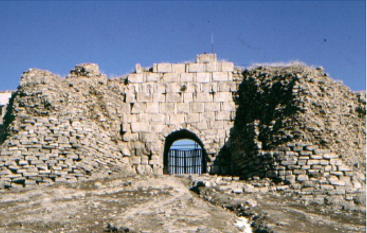 One of the archways at Ādur-Gushnasp (Picture Source: World Historia).
The region’s climate, particularly the long rainy season and extreme temperature variations, as well as seismic action represent the major threats to the integrity of the original stone and masonry materials. Potential risks in the future include development pressures and the construction of visitor facilities in the buffer zones around the sites. Furthermore, there is potential conflict between the interests of the farmers and archaeologists, particularly in the event that excavations are undertaken in the valley fields.
Authenticity
The Takht-e Soleyman archaeological ensemble is authentic in terms of its forms and design, materials and substance, and location and setting, as well as, to a degree, the use and the spirit of the fire temple. Excavated only recently, the archaeological property’s restorations and reconstructions are relatively limited so far: a section of the outer wall near the southern entrance has been rebuilt, using for the most part original stones recovered from the fallen remains; and part of the brick vaults of the palace structures have been rebuilt using modern brick but in the same pattern as the original. As a whole, these interventions can be seen as necessary, and do not compromise the authenticity of the property, which retains its historic ruin aspect. The ancient fire temple still serves pilgrims performing Zoroastrian ceremonies.
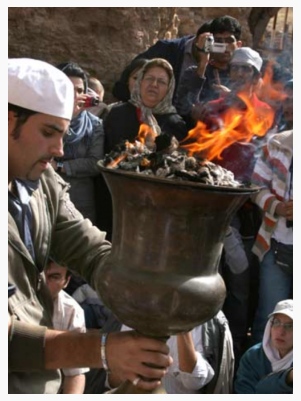 The Gahanbar ceremony at the Azargoshasb Fire Temple. After the prayers are concluded, a “Damavaz” (a ceremony participants) holds aloft the censer containing fire and incense in his hand to pass around the congregation. As this is done, the Damavaz repeats the Avesta term “Hamazour” (translation: Let us unite in good deeds). Participants first move their hands over the fire and then over their faces: this symbolizes their ambition to unite in good works and the spread of righteousness (Photo Source: Sima Mehrazar).
Protection and Management requirements
Takht-e Soleyman was inscribed on the national heritage list of Iran in 1931, and it is subject to legal protection under the Law on the Protection of National Treasures (1930, updated 1998) and the Law of the Iranian Cultural Heritage Organization Charter (n. 3487-Qaf, 1988). The inscribed World Heritage property, which is owned by the Government of Iran, is under the legal protection and management of the Iranian Cultural Heritage, Handicrafts and Tourism Organization (which is administered and funded by the Government of Iran). Acting on its behalf, Takht-e Soleyman World Heritage Base is responsible for implementation of the archaeology, conservation, tourism, and education programs, and for site management. These activities are funded by the Iranian Cultural Heritage, Handicrafts and Tourism Organization, as well as by occasional international support. The current management plan, prepared in 2010, organizes managerial strategies and activities over a 15-year period.
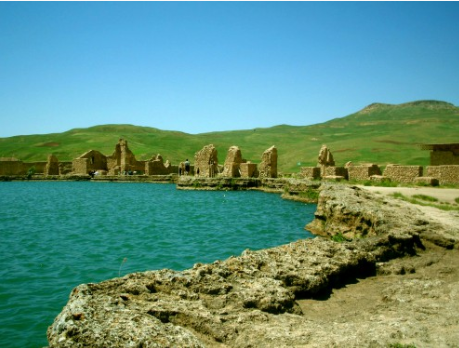 An excellent view of the edge of the lake at Ādur-Gushnasp (Photo Source: Public Domain).
Sustaining the Outstanding Universal Value of the property over time will require continuing periodic on-site observations to determine whether the climate or other factors will lead to a negative impact on the Outstanding Universal Value, integrity or authenticity of the property; and employing internationally recognized scientific standards and techniques to properly safeguard the monuments when undertaking stabilization, conservation, or restoration projects intended to address such negative impacts.
Related posts:
The Ancient Site of Takhte Sulaiman
UNESCO: The Parthian Fortresses of Nysa
UNESCO: Sassanian Archaeological Landscape of the Fars Region
UNESCO: Citadel, Ancient City and Fortress Buildings of Derbent
Photos of the Atashgah (Zoroastrian Fire Temple) in Tbilisi, Georgia
Ancient Zoroastrian Temple discovered in Northern Turkey
Zoroastrian and Mithraic Sites of the Caucasus
Documentary Film Production: the UNESCO Sassanian Fortress in Darband
By Dr. Kaveh Farrokh|March 22nd, 2024|Archaeology, Architecture, Culture, Heritage, Military History 1900-Present, Mithraism, Mythology and Nowruz, Sassanians, UNESCO, Zoroastrianism|Comments Off
International Day of Conscience April 5
 Promoting a Culture of Peace with Love and Conscience
The preamble to the Universal Declaration of Human Rights states that “disregard and contempt for human rights have resulted in barbarous acts which have outraged the conscience of humankind, and the advent of a world in which human beings shall enjoy freedom of speech and belief and freedom from fear and want has been proclaimed as the highest aspiration of the common people.” Moreover, article 1 of the Declaration states that “all human beings are born free and equal in dignity and rights and are endowed with reason and conscience and should act towards one another in a spirit of brotherhood.”
The task of the United Nations to save future generations from the scourge of war requires transformation towards a culture of peace, which consists of values, attitudes and behaviours that reflect and inspire social interaction and sharing based on the principles of freedom, justice and democracy, all human rights, tolerance and solidarity, that reject violence and endeavour to prevent conflicts by tackling their root causes to solve problems through dialogue and negotiation and that guarantee the full exercise of all rights and the means to participate fully in the development process of their society.
Conscious of the need for the creation of conditions of stability and well-being and peaceful and friendly relations based on respect for human rights and fundamental freedoms for all without distinction as to race, sex, language or religion, the General Assembly declared 5 April the International Day of Conscience.
The General Assembly invited all Member States, organizations of the United Nations system and other international and regional organizations, as well as the private sector and civil society, including non-governmental organizations and individuals, to build the Culture of Peace with Love and Conscience in accordance with the culture and other appropriate circumstances or customs of their local, national and regional communities, including through quality education and public awareness-raising activities, thereby fostering sustainable development.
https://www.un.org/en/observances/conscience-day
History
The inaugural International Day of Conscience was first commemorated in 2020 by the United Nations General Assembly. This annual observance was established to encourage people around the world to introspect, follow their conscience, and do what is right.
Medieval Belt Hook Unearthed in Poland
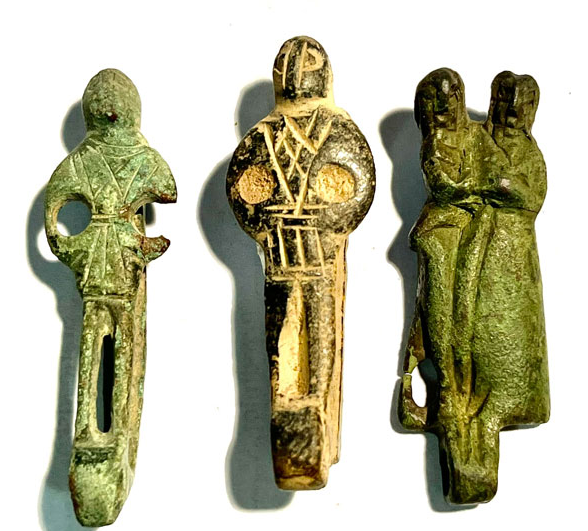 WEST POMERANIA, POLAND—According to a Science in Poland report, a medieval belt hook for hanging keys or a purse has been unearthed in northwestern Poland by a metal detectorist. Archaeologist Grzegorz Kurka of the Kamień Land History Museum said that similar rare belt hooks have been found in Hungary, Austria, and Germany. This one is in the shape of a person with his hands resting on his hips and elbows out, creating two holes. A hole for another hanging item was placed at the bottom of the figure. A face and clothing are engraved in the metal.
Happy Sizdeh Be Dar
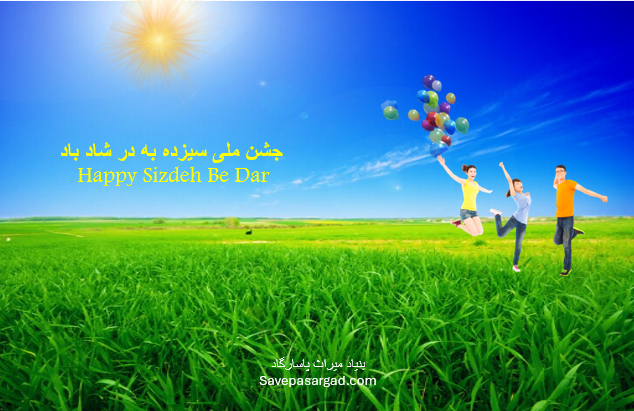 Sizdeh-be-dar is an National and ancient festival of Iranian held annually on the thirteenth day of Farvardin،the first month of the Iranian calendar, during which people spend time picnicking outdoors.
Happy Nowruz Video – Iranian New Year
Happy Nowruz, Iranian New Year
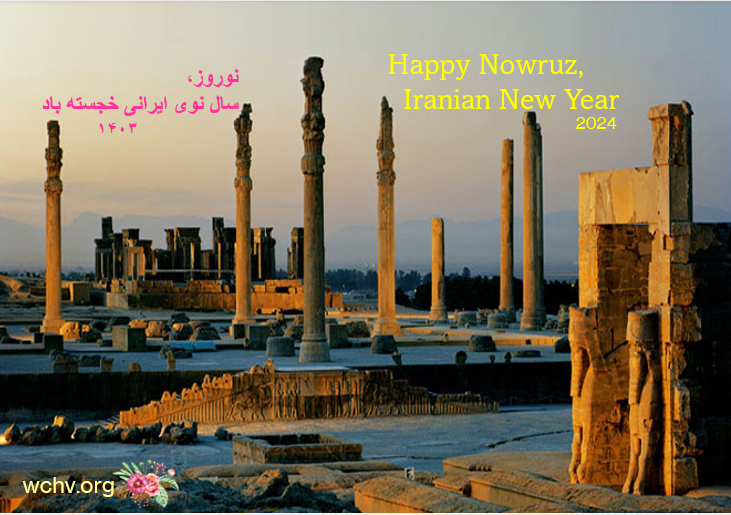 In general, it is understood that people of all countries cherish their cultural heritage and demonstrate the best of their culture and heritage to others. It is clear that the cultural values of any period of history are measured based on the existence of those known values as well as the preservation and remembrance of those values and heritage. There have been few cultures that have preserved and have been able to perpetually advance their cultural traditions well beyond their own borders and celebrate it with the rest of the people of the world.
One of these cultures is our “beautiful and secular Iranian culture”;
A culture that respects wisdom and praises kindness,
A culture that has no preference or religious, ethnic, racial, sexual and gender discrimination,
A culture that avoids violence and sadness and loves peace and happiness,
A culture with over thousands of New Year’s celebration which has now transcended across borders and countries around the globe with its beautiful and stunning rituals and ceremonies,
And a culture that even under the suppression of one of the most violent and tyrannical religious governments and its cruel practices, has not reduced its value and credibility; rather, it has shown its significance and pride.
On the eve of our beautiful Nowruz, we hear the same familiar call which has been uttered by cultures and peoples all over the world and now being repeated by people of Iran: “We want a healthy and free life in a free country that celebrates Nowruz and can no longer tolerate the death of freedom loving people.”
Happy Nowruz and Iranian New year
Shokooh Mirzadegi
www.savepasargad.com
Nowruz; Iranian New Year Marking the First Day of Spring
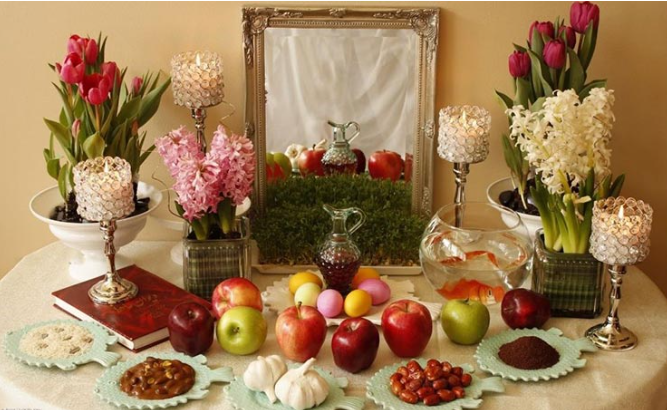
Nowruz marks the first day of spring, or Equinox, and the beginning of the year in the Persian calendar. It is celebrated on the day of the astronomical northward equinox, which usually occurs on March 21 or the previous or following day, depending on where it is observed. The moment the sun crosses the celestial equator and equalizes night and day is calculated exactly every year, and families gather together to observe the rituals.
Nowruz has been celebrated by people from diverse ethnic communities and religious backgrounds for thousands of years. It is a secular holiday that is enjoyed by people of several different faiths. It originated in Persia in one of the capitals of the Achaemenid empire in Persis (Fars) in Iran and is also celebrated by cultural regions that came under Iranian influence or which had migrations by Persians including Azerbaijan, the North Caucasus, Kurdish inhabited regions of eastern Turkey and Northern Iraq, Afghanistan, Pakistan, Tajikistan, Turkmenistan, Uzbekistan, Kyrgyzstan, Kazakhstan, and other scattered populations in Central and South Asia.
The term Nowruz first appeared in writing in historical Persian records in the 2nd century CE, but it was also an important day during the time of the Achaemenids (c. 550–330 BCE), where kings from different nations under the Persian Empire would bring gifts to the Emperor, also called the King of Kings (Shahanshah) of Persia, on Nowruz. The significance of Nowruz in the Achaemenid Empire was such that the great Persian king Cambyses II’s appointment as the king of Babylon was legitimized only after his participation in the New Year festival.
The UN’s General Assembly has recognized the International Day of Nowruz, describing it as a spring festival of Persian origin which has been celebrated for over 3,000 years. During the meeting of the Intergovernmental Committee for the Safeguarding of the Intangible Cultural Heritage of the United Nations, held 2009, Nowruz was registered on the UNESCO Representative List of the Intangible Cultural Heritage of Humanity.
Haft-Seen, also spelled as Haft Sīn (Persian: هفتسین, the seven seen’s), is a tabletop (sofreh) arrangement of seven symbolic items traditionally displayed at Nowruz. The haft-seen table includes seven items all starting with the letter Seen (letter s, fa, س) in the Persian alphabet.
The Haft-Seen table items include:
- Sabzeh (سبزه) – wheat, barley, mung bean, or lentil sprouts growing in a dish, symbolizing rebirth
- Samanu (سمنو) – sweet pudding made from wheat germ, symbolizing affluence
- Senjed (سنجد) – dried oleaster, a wild olive fruit, symbolizing love
- Seer (سیر) – garlic, symbolizing medicine and health
- Seeb (سیب) – apple, symbolizing beauty
- Somāq (سماق) – sumac fruit, symbolizing the color of the sunrise
- Serkeh (سرکه) – vinegar, symbolizing old age and patience
The following items may also appear on the Haft-Seen table as ornaments or for the sake of completeness. Although some of these items are Persian symbols, they are not a main part of the traditional Haft-Seen.
- A holy book
- Divan-e Hafez, a Persian poetry book
- a mirror
- a goldfish in a bowl, symbolizing life
- a brazier of fire
- a lamp
- cypress or pine
- pomegranates
- painted eggs
- coins, symbolizing wealth
- candles
- a bowl of water
- wheat or bread
International Nowruz Day
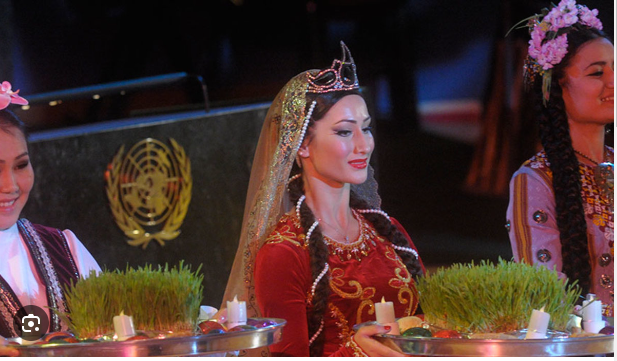 International Nowruz Day 21 March
What is Nowruz and why do we celebrate it?
The word Nowruz (Novruz, Navruz, Nooruz, Nevruz, Nauryz), means new day; its spelling and pronunciation may vary by country.
Nowruz marks the first day of spring and is celebrated on the day of the astronomical vernal equinox, which usually occurs on 21 March. It is celebrated as the beginning of the new year by more than 300 million people all around the world and has been celebrated for over 3,000 years in the Balkans, the Black Sea Basin, the Caucasus, Central Asia, the Middle East and other regions.
Inscribed in 2009 on the Representative List of the Intangible Cultural Heritage of Humanity as a cultural tradition observed by numerous peoples, Nowruz is an ancestral festivity marking the first day of spring and the renewal of nature. It promotes values of peace and solidarity between generations and within families as well as reconciliation and neighbourliness, thus contributing to cultural diversity and friendship among peoples and different communities.
Nowruz plays a significant role in strengthening the ties among peoples based on mutual respect and the ideals of peace and good neighbourliness. Its traditions and rituals reflect the cultural and ancient customs of the civilizations of the East and West, which influenced those civilizations through the interchange of human values.
Celebrating Nowruz means the affirmation of life in harmony with nature, awareness of the inseparable link between constructive labour and natural cycles of renewal and a solicitous and respectful attitude towards natural sources of life.
Background
International Nowruz Day was proclaimed by the United Nations General Assembly, in its resolution A/RES/64/253 of 2010, at the initiative of several countries that share this holiday. Under the agenda item of “culture of peace”, the member states of Afghanistan, Azerbaijan, Albania, the Former Yugoslav Republic of Macedonia, Iran (Islamic Republic of), India, Kazakhstan, Kyrgyzstan, Tajikistan, Turkey and Turkmenistan prepared and introduced a draft resolution (A/64/L.30) entitled “International Day of Nowruz” to the ongoing 64th session of the General Assembly of the United Nations for its consideration and adoption.
In the 71st plenary meeting on 23 February 2010, The General Assembly welcomed the inclusion of Nowruz in the Representative List of the Intangible Cultural Heritage of Humanity by the United Nations Educational, Scientific and Cultural Organization on 30 September 2009.
It also recognized 21 March as the International Day of Nowruz, and invited interested Member States, the United Nations, in particular its relevant specialized agencies, funds and programmes, and mainly the United Nations Educational, Scientific and Cultural Organization, and interested international and regional organizations, as well as non-governmental organizations, to participate in events organized by States where Nowruz is celebrated.